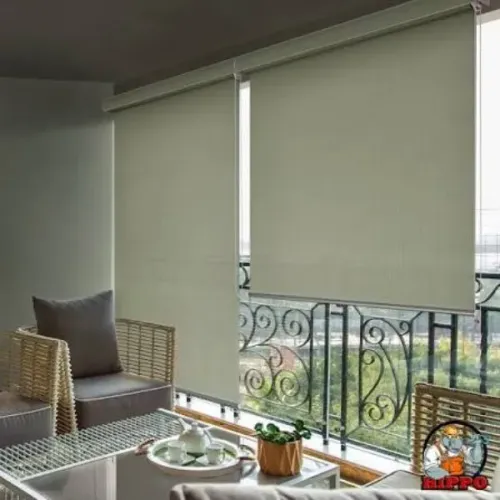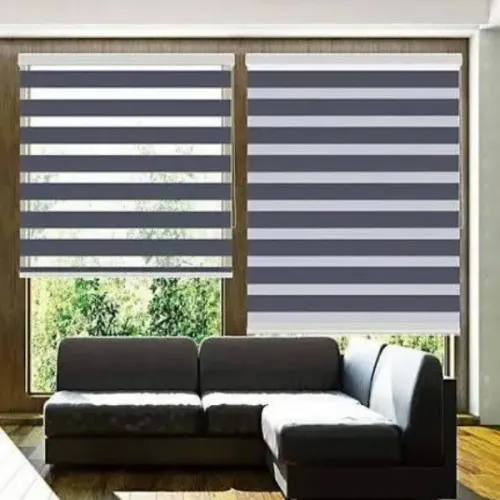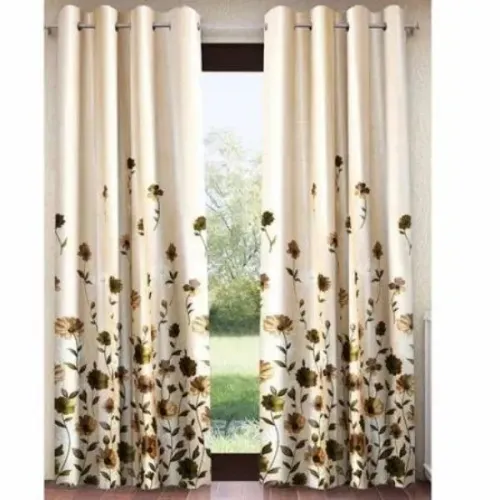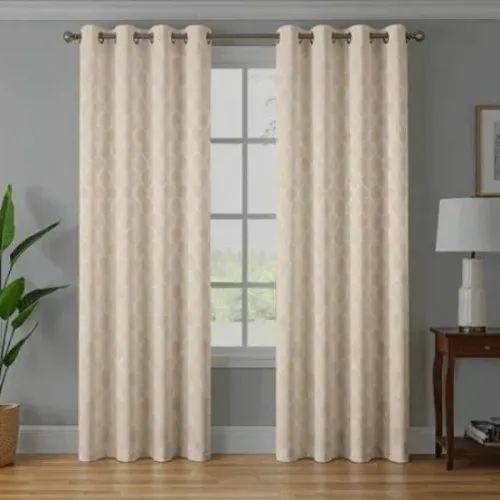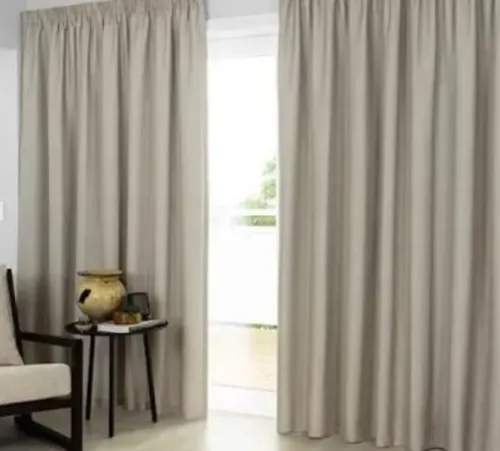
Blackout fabric alone does not guarantee a dark or private room: light and sightlines can remain around the curtain, above the track, below the hem and between panels. By the end, you will know how to measure, mount and operate blackout curtains so they control glare, nighttime privacy and bedroom brightness without creating avoidable heat, condensation or morning-light problems.
Key takeaways
- Seal gaps above, beside, between, and below curtain panels.
- Mount curtains wider and higher than the window for better coverage.
- Choose blackout, room-darkening, or thermal curtains for the job you need.
- Use adjustable lighting so a dark room remains practical during daytime.
Why Blackout Fabric Still Leaves Light and Privacy Gaps
A “blackout” label describes blackout fabric, not a sealed room. Light can enter above the rod or track, at the sides, between panels, or beneath the hem, leaving the room visibly bright even when the fabric blocks light. A blackout installation must close those routes.
After sunset, the same openings create nighttime privacy failures: passers-by may see silhouettes, movement, or faces through illuminated gaps.
- Choose a ceiling-mounted or recessed track to reduce light entering above the curtain.
- Overlap the centre panels so they do not separate along the meeting line.
- Extend side returns toward the wall, beyond the window frame, to block diagonal streetlight and viewing angles.
- Size the curtain width for the intended track or rod, not only the glass; insufficient fullness leaves gaps when the panels close.
- Extend the drop below the sill or toward the floor when light escaping underneath matters.
Blackout fabric itself can still glow if it is thin, permeable, or poorly lined. Test the finished treatment with the room lights on after dark, viewing it from the street, neighbouring buildings, and other positions outside the window.
Daytime privacy proves little: a bright exterior can hide the room, while an illuminated room reveals occupants through uncovered edges and openings. A panel mounted several inches away from the window also leaves more paths for light and sightlines than a close-fitting treatment.
How to Measure and Mount Curtains for Better Coverage
Measure the area the curtain must cover, not just the glass. A blackout installation needs coverage above the frame, beyond both sides and below the window; otherwise daylight and streetlight will enter through the edges.
- Choose the mounting line. For an outside mount, measure from the point where the track or rod will begin to the opposite end, extending past both side frames. A ceiling-mounted track reduces the top gap and works well when the curtain should cover the full recess or wall.
- Measure the intended curtain width and drop. Record the track width, then allow enough fabric fullness for proper folds: finished fabric width is commonly 1.5 to 2 times the track width. Add a centre overlap so the two panels do not separate into a bright vertical slit.
- Measure the drop from the track’s curtain carrier to the floor, sill or chosen lower point. Let a floor-length curtain finish close to the floor without dragging; for a sill, extend below the sill so light cannot pass underneath.
- Specify side returns that travel toward the wall, especially with an outside mount. The return closes the gap between the panel and wall; a rod-mounted panel that ends at the glass leaves a clear leakage path.
Check that the track, folds and curtain hem clear handles, radiators and window vents. On sunny windows, leave the clearance recommended for the glazing and provide ventilation behind the treatment, since a tightly enclosed space can trap heat.
Blackout, Room-Darkening and Thermal Curtains Do Different Jobs
Choose blackout curtains for the strongest light control, room-darkening or dim-out curtains for reduced glare, and thermal-insulated curtains for temperature comfort. The label describes the fabric’s intended performance, not how completely the finished installation will darken the room.
| Label | Main job | Choose it when | Important limitation |
|---|---|---|---|
| Blackout curtains | Block most incoming light | You sleep in daylight, work night shifts, or need a dark bedroom | Light can still enter above the track, through side gaps, between panels, or below the hem |
| Room-darkening curtains | Reduce light without creating near-total darkness | You want lower glare for a bedroom, nursery, television room, or home office | They leave more ambient light than a true blackout setup |
| Dim-out curtains | Soften daylight and streetlight | You want privacy and gentler light while keeping the room usable | They are not intended for reliable daytime sleeping |
| Thermal-insulated curtains | Slow radiant heat transfer at the window | You want less heat gain, cold-window discomfort, or draught sensation | They do not repair air leakage, poor glazing, or a weak window U-factor |
Darkness affects sleep in practice because light reaches biological systems even through closed eyelids. In a controlled study, approximately 100 lux of ordinary room light during sleep suppressed melatonin by more than 50% and shortened the period of elevated melatonin; the result does not prove curtains alone improve sleep quality for everyone.
For near-total darkness, use a ceiling-mounted track, overlapping centre panels, side returns toward the wall, and enough width and drop to cover the frame. Open the treatment on a timer or pair it with a sheer layer, because staying in darkness after waking removes a useful morning light cue.
What Curtains Improve Besides Darkness—and What They Cannot Fix
A blackout curtain can reduce radiant heat and glare enough to make a room feel calmer, but it does not upgrade the window itself. It will not change the glass’s U-factor, stop air leaking through worn seals, or correct poor frame installation.
Sleep may benefit from less nighttime light; curtains alone do not guarantee better sleep.
| Problem | What curtains can improve | What requires more than fabric |
|---|---|---|
| Window heat gain | Limits sunlight and radiant warmth through the glass | Exterior shutters, solar-control film, shade, or low-emissivity glazing |
| Window heat loss | Adds a modest insulating layer when the lining, fullness, and fit are good | Weatherstripping, sealant, secondary glazing, or replacement glazing |
| Noise reduction | Absorbs some reflected high-frequency sound inside the room | Laminated acoustic glass, airtight seals, a better frame, or wall improvements |
| Condensation behind curtains | Changes the room-side thermal feel but can hide wet glass | Lower indoor humidity, ventilation, and correction of cold bridges or leaks |
| Safety | Adds privacy and blocks visibility | Cordless hardware, clear emergency egress, secure locks, and safe clearance from heaters |
Close-fitting fabric can reduce comfort problems while creating a moisture problem. If condensation behind curtains persists, open the treatment for airflow and inspect the sill, lining, and wall for staining or microbial growth. A curtain also cannot block low-frequency traffic or voices like a sealed window assembly can.
How to Keep a Dark Room Usable During the Day
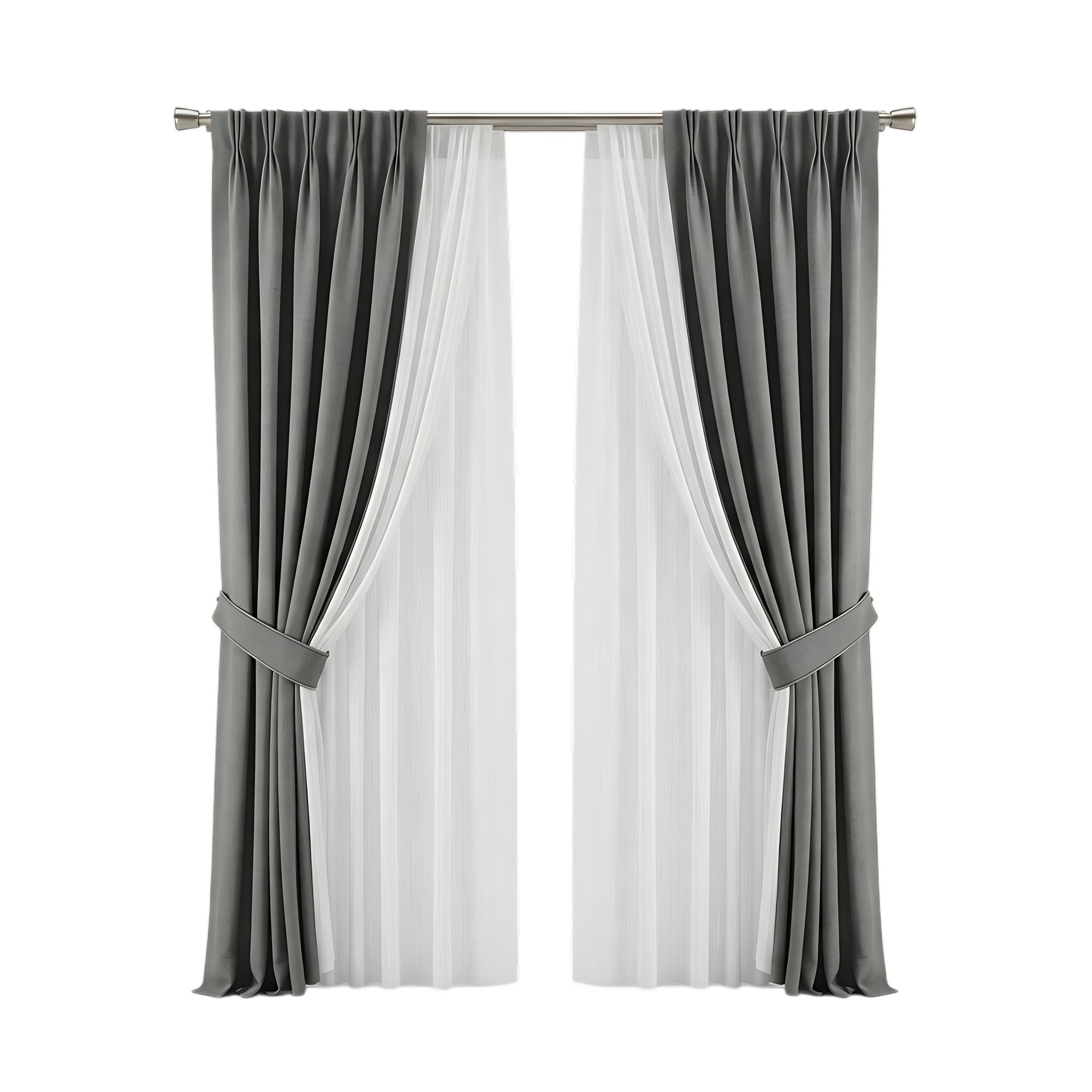
Use two layers rather than leaving blackout panels closed from bedtime until lunch: one layer for reliable night darkness and another for daylight control. Sheer curtains with blackout curtains let you uncover the window gradually, preserve privacy in the daytime and retain a natural morning light cue.
| Setup | Day use | Night use | Main trade-off |
|---|---|---|---|
| Blackout panels alone | Open fully for daylight and ventilation | Close for maximum darkness | Manual opening becomes easy to forget |
| Sheer curtains with blackout curtains | Keep sheers drawn for filtered light and privacy | Close both layers for stronger darkness | Needs enough window depth for two tracks |
| Motorized curtains | Schedule blackout panels to open after waking | Close automatically at bedtime | Requires power, controls and a reliable override |
Do not seal a humid room behind a closed curtain all day. Open the treatment periodically so air reaches the glass, and investigate persistent condensation rather than hiding it; moisture behind the lining can stain the sill or wall.
Choose custom-fitted curtains with a ceiling-mounted track, overlapping centre panels and side returns that reach toward the wall. That combination limits sunrise and streetlight spill while allowing the panels to stack clear of the glass. Blinds N Curtains can help coordinate the track, lining and opening method when the window also needs daytime ventilation.
For convenience, test the setup with room lights on after dark. Check the edges from the street or neighbouring windows, then confirm that the panels open far enough to expose the whole window without blocking handles or vents.
Related product
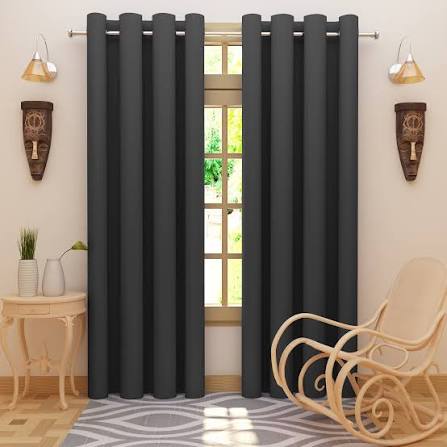 | Blackout Curtains at Blinds N Curtains offer the ultimate fusion of absolute privacy, light control, and sleek window styling. View product → |
Frequently asked questions
Why do blackout curtains still let light into a room?
Blackout fabric blocks light through the material, but light can enter above the rod, at the sides, between panels, or beneath the hem.
How should you measure and mount blackout curtains?
Measure the window and each potential light-leak route, then mount the rod or track higher and wider than the window to improve coverage.
What is the difference between blackout, room-darkening, and thermal curtains?
Blackout curtains target light blockage, room-darkening curtains reduce light without creating complete darkness, and thermal curtains focus on reducing heat transfer.
What can blackout curtains improve besides darkness?
They can improve privacy, reduce glare, support a more comfortable sleeping environment, and help manage indoor temperature.
How can you keep a room usable during the day with blackout curtains?
Use layered or adjustable window coverings and add practical daytime lighting so you can control darkness without losing visibility.