
The correct cleaning method depends on the sewn-in label, fibre composition, lining, coatings, and attached trims—not simply on whether a curtain looks washable. By the end, you will be able to identify the safe cleaning route, treat common stains, dry and press the fabric correctly, and recognise when a constructed or motorised curtain needs specialist care.
Key takeaways
- Read separate care instructions for fabric, lining, interlining, and trims.
- Test stain treatments on a hidden area before cleaning the visible mark.
- Dry curtains fully before rehanging or storing them.
- Use specialist care for coatings, motorised tracks, and delicate construction.
Read the label before choosing water or solvent cleaning
Use this curtain makers care guide for D'Decor curtains as a label-reading checklist, not as permission to apply one washing rule to every fabric. Find the sewn-in label and record the fibre composition, then check whether separate instructions apply to the face fabric, lining, interlining, trims, or attached components.
| Method | Label or symbol | What to do |
|---|---|---|
| Machine-washable | Uncrossed wash tub, with a temperature number or dots | Use the stated temperature and cycle; do not exceed them. |
| Hand-washable | Wash tub with a hand symbol | Wash gently by hand at the labelled temperature; do not substitute a machine cycle. |
| Dry-clean-only | Circle symbol, often with a letter | Give the complete curtain to a cleaner experienced with drapery. |
| Unsuitable for water cleaning | Crossed-out wash tub | Do not soak, hand-wash, or machine-wash; follow the dry-cleaning instruction or ask a specialist. |
A crossed-out triangle means no bleach, and a crossed-out iron means no ironing. These symbols set treatment limits, not a guarantee that colour, shape, texture, or sheen will remain unchanged. A dry-clean-only label is not permission to test home washing.
Inspect blackout curtains before choosing solvent cleaning: foam-backed, acrylic-coated, or rubberized layers can crack, stick, delaminate, or transfer. If the label is missing, illegible, or conflicts with the fabric construction, stop and ask a professional drapery cleaner to identify the safe method.
Match the washing method to the fabric and construction
Use 30°C water, a mild liquid detergent, the gentlest cycle, and a low spin of 400–600 rpm for washable curtains. Fill the drum only one-third to one-half full so pleats and heading tape can move freely; overcrowding causes creasing, uneven cleaning, and stretching.
Never add bleach or fabric softener unless the sewn-in label specifically permits it.
Fabric or construction | Washing method and settings | Main risk
Cotton | Machine-wash at the label temperature, usually 30°C, on a gentle cycle with 600 rpm or less. | Shrinkage and colour bleeding; remove promptly after washing.
Polyester | Use 30–40°C, a synthetic or delicate cycle, mild liquid detergent, and 600–800 rpm. | Heat can set creases or damage bonded details.
Blends | Follow the most delicate fibre: 30°C, delicate cycle, mild detergent, and 400–600 rpm. | One fibre can shrink while another stays stable.
Silk | Hand-wash only when labelled washable, in cool water with silk detergent; do not wring. | Water rings, dye loss, and permanent creasing.
Velvet | Dry-clean unless the label expressly allows washing; never rub or twist. | Water and abrasion flatten the pile or change its sheen.
Sheer fabric | Use a mesh bag, 30°C delicate cycle, 400 rpm, and a half-load maximum. | Snags, distortion, and seam damage.
Blackout or lined curtains | Do not machine-wash unless the label permits it; coatings, lining, buckram, and weighted hems need compatible treatment. | Differential shrinkage, peeling, or a rippled lining.
For d decor curtains care, treat the weakest component as the limit. A dry-clean-only label overrides a washable face fabric, and a professional cleaner must know the curtain is a constructed window treatment.
Remove dust and stains without creating a larger mark
Use a clean upholstery attachment at low suction, moving from the top downward. Turn off the rotating brush and beater bar: they can pull loops, distort pleats, abrade velvet pile, or catch decorative trims. Vacuum both sides only when the fabric and construction allow it.
For fresh marks, protect the fabric before reaching for a cleaner:
- Food: lift crumbs or solids with a blunt spoon, then blot the residue with a white, lint-free cloth.
- Oil: place plain white paper over the spot and press lightly to absorb surface oil; do not rub it into the fibres.
- Ink or makeup: stop home treatment and ask a drapery cleaner, because solvent can spread pigment and leave a pale ring.
- Water: do not wet the centre alone. A small damp patch can dry as a tide mark.
The safest answer to how to maintain d decor curtains is to avoid rubbing, coloured cloths, detergent concentrate, and household stain removers.
If the care label permits a proposed treatment, test it on a hidden hem first; let it dry completely and check for dye transfer, shrinkage, stiffness, or a changed sheen before touching the visible panel. Silk, viscose, velvet, blackout coatings, and lined curtains deserve professional cleaning when a mark remains.
Dry, press, protect, and store the curtains correctly
Hang a washable, lightweight curtain damp only when its label permits it and the fabric will not stretch under its own weight. Support the heading tape evenly, open the pleats, and keep the window ventilated; a heavy, lined panel can lengthen or crease while wet.
Choose the drying method by construction:
- Lay silk, velvet, heavily embellished, or shape-sensitive curtains flat on clean towels. Turn velvet with the pile facing up, and do not press or rub the surface.
- Place sheer or delicate panels on a clean, padded drying rack when hanging wet could distort them. Keep the rack away from radiators, heaters, and direct sun.
- Iron only when the iron symbol permits it. Use the lowest suitable setting, iron on the reverse through a pressing cloth, and test a hidden hem first.
- Steam hanging fabric for light creases when the label allows steaming. Keep the nozzle moving; heat and moisture can flatten velvet, mark silk, or loosen a blackout coating.
- Shield fabric from strong sunlight by closing curtains during peak exposure, rotating movable panels, using a lining, and keeping textiles away from hot glass. Ultraviolet light fades dye and weakens fibres.
For d decor curtain maintenance, skip tumble-drying and heated air unless the sewn-in label expressly allows them. Store removable curtains only when fully dry: fold them loosely with acid-free tissue or a clean sheet between deep folds, then place them in a cool, dry, dark cupboard.
Never seal damp fabric; mildew, dye transfer, and permanent creases can follow.
Know when the curtain, lining, coating, or motor needs specialist care
Stop home maintenance when cleaning could alter the curtain’s construction, coating, or operating hardware. A sewn-in label must guide the decision; “dry clean only” is not permission to machine-wash. Tell a professional drapery cleaner that the item is a constructed window treatment, not loose fabric.
Contact an experienced curtain maker or cleaner when:
- Foam-backed, acrylic-coated, or rubberized blackout fabric is cracking, sticking, flaking, transferring colour, or separating from the face fabric.
- A lined or interlined curtain has a weighted hem, buckram, heading tape, pleats, or attached trim that could shrink at a different rate from the face fabric.
- A silk, velvet, sheer, or dry-clean-only panel has an unknown composition, deep stain, water ring, dye transfer, or changed sheen.
- Seams are opening, hems are dropping, or sunlight has weakened the cloth.
Use an installer for sagging tracks, loose brackets, uneven curtain height, or a treatment that rubs against a handle or furniture. For motorised tracks, stop pressing the control if the curtain stalls, reverses, fails to stop at its programmed limit, or develops a grinding sound; a service technician should inspect it.
Never improvise repairs to a loose looped cord or inaccessible safety device.
Blinds N Curtains can verify the fabric construction and hardware before arranging cleaning or service, which prevents a coated blackout layer from being treated like washable polyester.
Related products
 | D'Decor Curtains Elevate your interior living space with the premium collection of D'Decor Curtains at Blinds N Curtains. View product → |
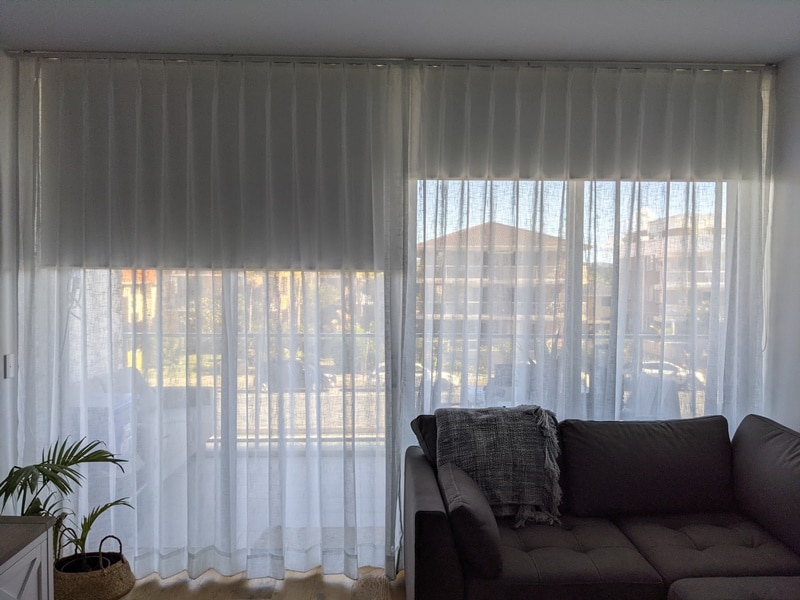 | Sheers ₹2000 Product Overview D'Decor Seamless Sheers represent the pinnacle of modern window treatments. View product → |
Frequently asked questions
How do you choose a cleaning method for D'Decor curtains?
Read the sewn-in label first, record the fibre composition, and check separate instructions for the face fabric, lining, interlining, trims, and attached components. Use water cleaning only when the label permits it; follow solvent-cleaning instructions when specified.
How should you remove dust and stains from D'Decor curtains?
Remove loose dust gently before treating a stain. Test the chosen treatment on a hidden area, use a clean absorbent cloth, and avoid rubbing, which can spread the mark or damage the fibres.
How should curtains be dried, pressed, and stored?
Dry curtains completely before rehanging or storing them. Press at the temperature stated on the care label, protect the fabric from direct heat, and store clean, dry curtains folded in a breathable cover.
When do D'Decor curtains need specialist care?
Contact a specialist when the curtain has a delicate lining, bonded interlining, blackout coating, trims, unusual construction, or motorised components. Do not wash or soak coated fabric or motorised parts without specific instructions.
Keywords