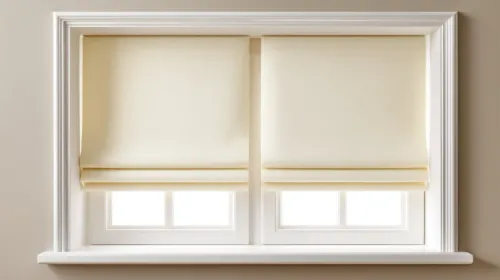
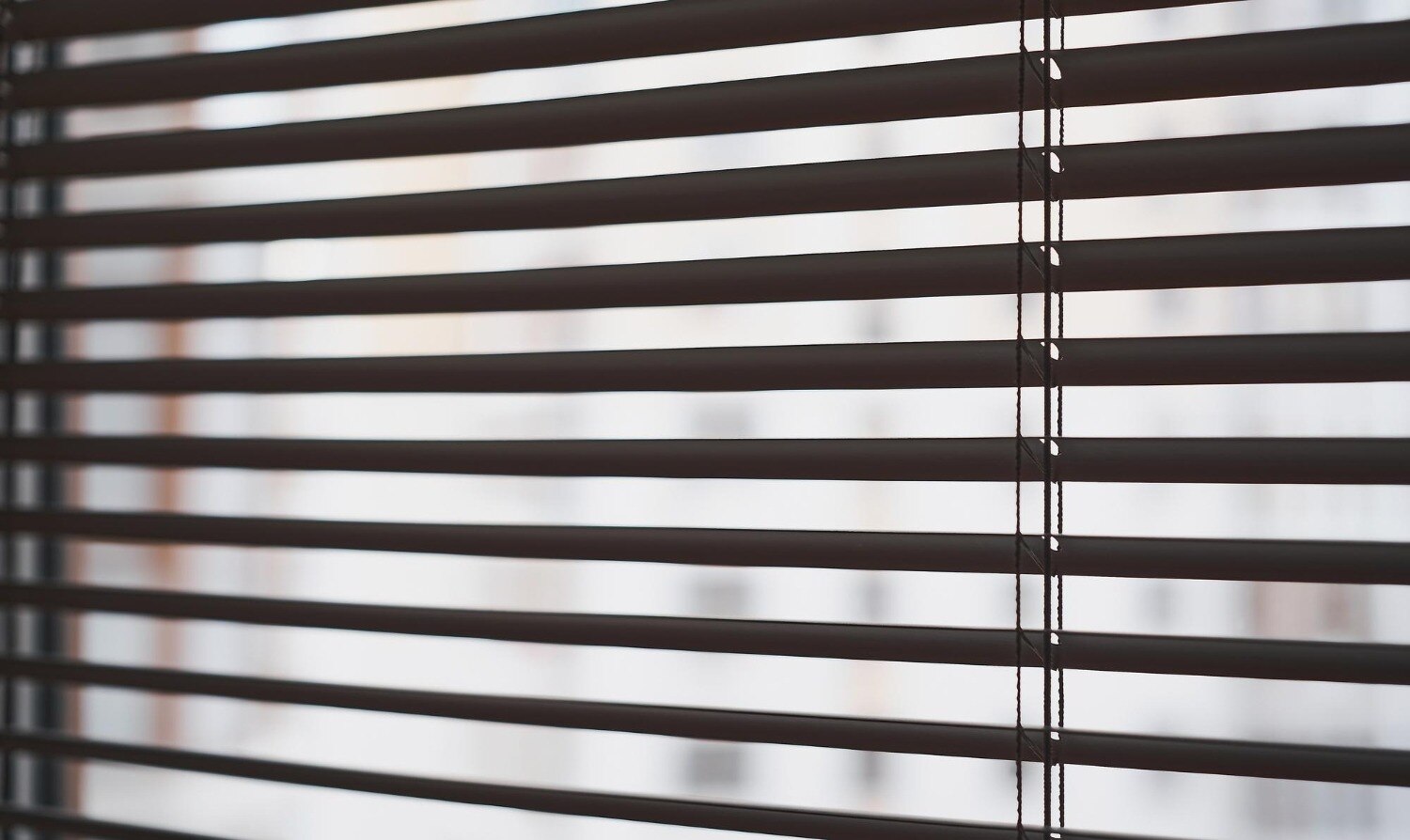
The right zebra blind depends on more than choosing a light or dark fabric. You need to match opacity to the room’s task, understand how the translucent and opaque bands align, and account for light leakage around the finished installation. By the end, you can compare samples, specify the correct mounting system, and identify when a zebra blind is unsuitable for the darkness or solar control you need.
Key takeaways
- Choose light-filtering fabric for softened daylight and reduced glare.
- Use room-darkening fabric for bedrooms, screens, and strong afternoon sun.
- Align opaque bands for privacy, but do not expect layer position alone to create blackout.
- Specify fabric opacity, window exposure, mounting, and side-light gaps before ordering.
How Zebra Blind Opacity Options Change the Light
Choose zebra blind opacity according to the light your room needs, not the darkest fabric available. Sheer or solar fabric preserves daylight and views; light-filtering fabric softens brightness; room-darkening fabric cuts glare; blackout fabric blocks the greatest amount of visible light.
| Opacity option | Light result | Best use |
|---|---|---|
| Sheer or solar | Bright daylight, retained view, limited glare control | Living rooms and view-facing windows |
| Light-filtering | Diffused daylight with softer contrast | Dining rooms and home offices |
| Room-darkening | Stronger glare reduction and a noticeably dimmer room | Television rooms and bedrooms |
| Blackout | The lowest fabric transmission available | Sleeping and projection spaces |
Labels are not standardised. Two fabrics called “light filtering” can transmit different amounts of light, so compare the manufacturer’s sample with published visible-light transmittance or openness data.
Textile construction changes the result. A tighter weave admits less light than an open weave; darker colours usually reduce reflected glare more effectively than pale colours, while pale fabrics keep the room visually brighter. Solar openness data is especially useful for comparing fabrics on sunny windows.
To learn how to choose zebra blinds accurately, hold the sample at the actual window during daylight and again after dark. Check it with interior lights on, because streetlights, neighbouring windows, window direction, and reflections can make a fabric appear brighter than it did in a showroom.
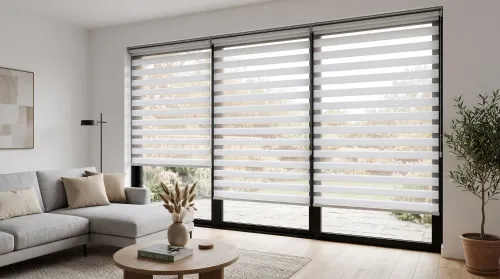
The two alternating layers also change the result: overlapping translucent bands admit more daylight, while aligned opaque bands reduce it substantially.
How the Two Zebra Blind Layers Control Privacy
The two zebra blind layers slide past each other so their horizontal bands either overlap or alternate. In a conventional shade, the front and rear layers move together as one unit; you adjust their relative alignment through the shade’s chain or motor, not as two independently controlled fabrics.
| Position | Band alignment | Result |
|---|---|---|
| Open | Translucent bands overlap | More daylight enters, with daytime privacy and reduced direct glare |
| Privacy or closed | Opaque bands cover the translucent bands | Less daylight, stronger privacy, and lower glare |
| Darkest available | Opaque bands remain aligned while the shade is fully lowered | The least light and visibility that this shade can provide |
The open position does not make the room transparent: overlapping sheer bands diffuse the view from outside during daylight. At night, interior lights can reverse that advantage, allowing silhouettes to show through.
Opaque alignment gives the strongest privacy setting, but it is not automatically blackout. Fabric openness, side gaps, the top cassette, and light around the bottom still affect darkness. A room-darkening or blackout fabric in a close-fitting cassette produces a darker result than a standard roll-style shade.
Use this distinction when deciding how to choose zebra blinds. If you need daytime privacy and a separate nighttime blackout setting, compare paired roller shades or a dual-shade system. A conventional “double-layer” zebra blind does not provide independent adjustment of its two fabric layers.
The Best Opacity for Each Room and Window Exposure
Choose zebra blind opacity by what the room must let you do, not by the darkest sample: sheer or solar preserves views, light-filtering softens daylight, room-darkening controls glare, and blackout blocks the most light. Direction, nearby buildings, and nighttime lighting can change the result.
| Room or exposure | Best starting opacity | Why it fits |
|---|---|---|
| Bedroom | Room-darkening; blackout for sleeping | Reduces early-morning light. Choose blackout for shift work or highly light-sensitive sleepers. |
| Television room | Room-darkening; blackout for projection | Cuts screen glare. Use blackout when stray light will wash out a projector image. |
| Home office | Light-filtering | Provides usable daylight without excessive screen reflection. Add room-darkening where afternoon sun hits the desk. |
| Living room | Sheer or solar; light-filtering for stronger sun | Preserves the outside view while softening brightness. Choose light-filtering for west-facing glazing. |
| Street-facing window | Light-filtering or room-darkening | Light-filtering balances privacy and daylight; room-darkening gives stronger privacy after sunset. |
The practical answer to how to choose zebra blinds is to test the fabric at the actual window in daylight and at night. Labels are not standardized: colour, weave density, window direction, streetlights, and interior lighting all affect transmission.
For bedrooms and media rooms, pair room-darkening or blackout fabric with a close-fitting cassette or side channels; layer alignment alone does not guarantee blackout.
Why Layer Position Alone Cannot Guarantee Blackout
Layer position alone cannot guarantee blackout: light can pass through the fabric, around the blind, or through gaps at the window perimeter. Aligning opaque bands reduces transmission, but it does not turn a standard zebra blind into a sealed blackout system.
Fabric orientation affects how the zebra blind layers meet. The front and rear layers must be threaded and aligned so an opaque band covers the opposing translucent band; a wrong-facing fabric or poor alignment can leave bright stripes even when you select the darkest position.
A blackout fabric among the zebra blind opacity options still depends on correct installation.
Blind height affects coverage rather than the fabric’s rated opacity. If the blind ends below the glass or leaves uncovered space above it, daylight enters directly and reflects into the room. Mounting the blind above the opening and extending it beyond the frame improves darkness.
Mounting inside a recess preserves a neat appearance but leaves the recess depth and frame shape working against full coverage. An outside mount covers more glass and reduces top and side leakage, while a cassette or side-channel system narrows the perimeter gaps further.
At night, even a small side gap can reveal movement or silhouettes when room lights are on. For a bedroom or media room, ask for measured overlap at the top, bottom, and sides; treat privacy and darkness as separate performance checks.
What to Specify Before Ordering Zebra Blinds
For the best blinds, zebra blind opacity and layer position must be specified before measurements become an order. Ask how to choose zebra blinds using fabric evidence, not labels alone: “light-filtering” is not standardised, so request the manufacturer’s openness or visible-light transmittance data and inspect a sample at your window in daylight and at night.
1. Confirm the fabric type—sheer or solar, light-filtering, room-darkening, or blackout—and compare its colour, weave density, and published data with the window’s direction and exposure.
2. Specify which band leads at the front and how the front and rear rolls must align. Incorrect orientation or uneven band spacing can leave stripes misaligned, prevent consistent closing, and cause telescoping or rubbing at the brackets.
3. Confirm operation before ordering. A conventional zebra blind moves both fabric layers together; it does not provide independently adjustable daytime and nighttime settings. Request a paired roller or dual-shade system if you need separate privacy and blackout control.
4. For motorization, record the power point, battery charging or replacement plan, upper and lower limit calibration, manual override, and compatibility with your home-automation platform.
5. Choose cordless or motorized operation for homes with young children or pets. If you select cords, ask which current window-covering safety requirements apply to your location and how the installer will meet them.
6. Require a level installation, synchronized rolls, secure brackets, and a final test at every stop. Ask Blinds N Curtains to document these checks on the installation handover.
Related product
 | Zebra Blinds Transform your living spaces with the modern elegance and functional versatility of Zebra Blinds from Blinds N Curtains. View product → |
Frequently asked questions
How do zebra blind opacity options change the light?
Sheer or solar fabric preserves daylight and views, light-filtering fabric softens brightness, room-darkening fabric reduces glare, and blackout fabric blocks the most visible light.
How do zebra blind layers control privacy?
Move the alternating sheer and opaque bands until the opaque sections overlap the view area. Open alignment admits more daylight and preserves the view.
What is the best zebra blind opacity for each room and window exposure?
Choose light-filtering fabric for bright living areas, room-darkening fabric for bedrooms and screens, and blackout fabric when sleep or projection requires minimal visible light. Increase opacity for unshaded south- or west-facing windows.
Why can layer position alone not guarantee blackout?
Light can enter through fabric weave, the headrail, bottom gap, and side gaps. A blackout result requires suitable fabric, close-fitting installation, and control of edge leakage.
What should you specify before ordering zebra blinds?
Confirm the fabric opacity, band alignment, window measurements, mounting position, control side, recess depth, chain or motor option, and the level of edge light you can accept.
Keywords