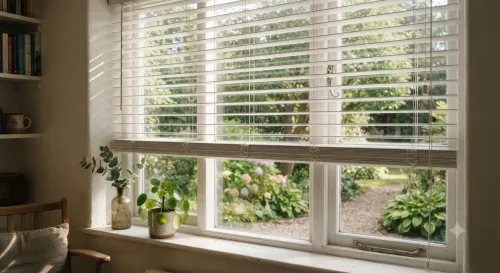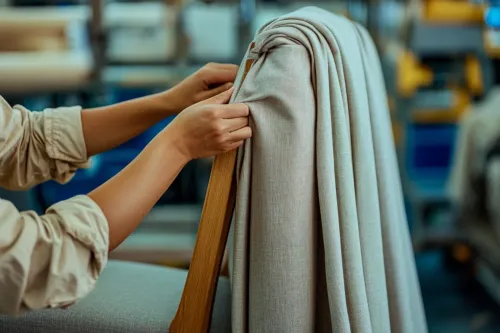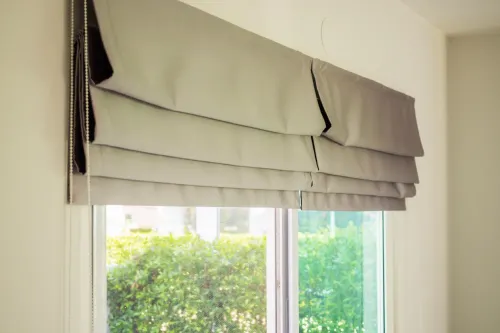
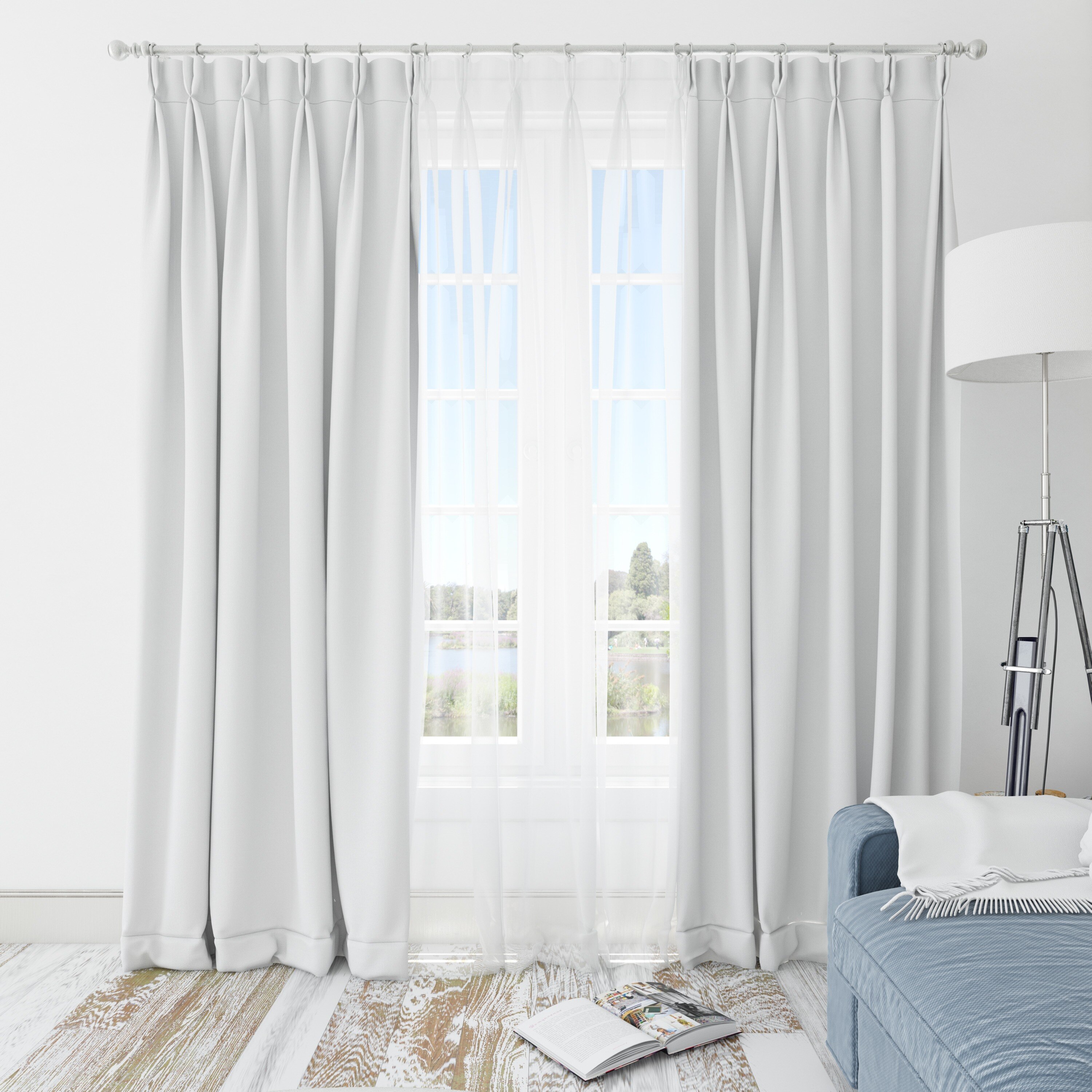
The real comparison is not simply one wide fabric against several narrow panels. You need to compare usable fabric width, fullness, seam visibility, handling, privacy, installation access, and the written scope of the quote before deciding which sheer suits your Delhi window. By the end, you will have a measurement method and a practical way to judge whether seamless construction justifies its added requirements.
Key takeaways
- Measure finished track width, not just the window opening.
- Confirm fabric width, fullness ratio, joins and installation charges.
- Choose seamless sheers for broad uninterrupted views and fewer vertical seams.
- Choose joined sheers when fabric selection, budget or narrow openings matter most.
What “seamless sheers” and standard sheers actually mean
Seamless sheers are wide-width fabrics made to cover a broad opening without a vertical joining seam. Standard sheers use narrower fabric widths, so two or more panels must be stitched together when the window exceeds one width.
“Seamless” does not mean completely stitch-free. Hems, side finishes, headings and, where required, pattern-matching joins remain part of the curtain. The difference is whether a vertical join interrupts the main hanging surface.
| Option | Construction | Visible appearance |
|---|---|---|
| Seamless sheers | One wide fabric width covers the opening, subject to its usable width and the chosen fullness | A continuous translucent field with no central vertical seam; the uninterrupted effect is clearest in daylight and across wide openings |
| Standard sheers | Multiple narrower widths are joined vertically to achieve the required finished width | Join lines can show when daylight passes through plain, pale fabric, especially from close range |
| Both options | Fabric is cut, hemmed and attached to a heading or track | Colour, weave, density, folds and installation still determine the final appearance |
The search phrase “best curtains shop seamless sheers versus standard sheers in Delhi” describes a visual decision before it describes a product category. Choose seamless sheers in Delhi when uninterrupted continuity across a wide opening matters most; choose standard sheers when fabric choice, lower material use, easier replacement or repair matters more.
A seam is not always obvious from across the room, but direct sunlight can expose it. A sample hung against your actual window gives a more reliable comparison than a folded fabric swatch.
Calculate usable width before deciding that your window is wide enough
A seamless sheer has enough usable width only when the supplier’s finished fabric width meets the curtain width required by your fullness setting. Compare measurements, not the label “seamless sheers in Delhi”.
1. Measure the track or rod, not only the glass. Add both side returns and any centre overlap. For example, a 360 cm track with 15 cm returns on each side and a 10 cm overlap needs 400 cm of coverage.
2. Choose fullness before checking fabric width. Multiply the 400 cm coverage by 1.5 for a softer, lighter gather, or by 2 for fuller folds. The fabric requirement becomes 600 cm or 800 cm respectively.
3. Ask for the fabric’s usable width after the supplier allows for side finishing, hems, pattern placement and cutting. A roll advertised as 300 cm wide does not automatically provide 300 cm of usable curtain width.
4. Compare that usable width with your calculated requirement. If the available width falls short, the curtain needs joined widths, even if the fabric is marketed as seamless. A join becomes easier to see when daylight passes through a plain translucent sheer.
5. Check the split and opening direction separately. A centre-opening curtain divides the required coverage between two panels, while a one-way curtain needs the full coverage on one side; both still require enough total fabric for the chosen fullness.
Get the calculation written on the quotation, including track width, returns, overlap, fullness factor, panel count and finished dimensions.
Compare folds, privacy, light and installation—not just the absence of seams
The practical choice turns on fullness, heading style, light, cleaning, repairs and installation—not simply whether the fabric has a seam.
| Feature | Seamless sheer | Standard joined sheer |
|---|---|---|
| Fullness and folds | A 2:1 fullness ratio uses about twice the track or pole width in fabric; higher fullness creates softer folds but needs more usable width. | Separate panels make width easier to achieve, though joins can interrupt wide wave folds or gathered headings. |
| Privacy and light | Pale, open sheers preserve daylight and reduce glare; they do not guarantee night privacy when the room is brighter than outside. | Denser or darker panels can obscure daytime detail more effectively, but can darken the room and show dust or handling marks. |
| Cleaning | Specify removable panels and written washing or professional-cleaning instructions. | Individual panels are easier to remove, wash, and handle without taking down the entire width. |
| Repairs | A snag or tear across one wide piece can require specialist repair or replacement. | A damaged panel can often be repaired or replaced without disturbing the others. |
| Installation | Confirm finished weight, track length, heading, stack-back space, power provision, and manual override before motorisation. | Multiple panels require accurate joining, alignment, overlaps, and more careful hanging. |
Lighting changes the result: a sheer that looks private from the street at noon can become transparent after sunset. Compare samples from inside the room, with lights on and off, from the actual viewing angles.
For sheer curtain options in Delhi, ask how dust removal works and whether the installer can remove, rehang, and realign each panel. A seamless curtain is not automatically compatible with automation; the fabric and operating system require separate checks.
What to verify when comparing a Delhi curtains shop quotation
A metre rate alone cannot tell you what a Delhi curtains shop will actually deliver. Ask for a written quotation showing the finished width, fullness ratio, fabric specification and every service charge.
| Quotation item | Verify | Why it matters |
|---|---|---|
| Measurements | Track or pole width, finished drop, side returns, overlaps and usable fabric width | A 2:1 fullness ratio needs roughly twice the track width in fabric; hems and headings reduce the available width |
| Fabric | Composition, roll width, usable width after finishing, care instructions, shrinkage tolerance and colour-fastness information | A wide-width fabric may still need joining if its usable width is too small |
| Charges | Fabric quantity, joining or seam fee, stitching, lining, track or rod, motor, electrical work and delivery | A low metre rate can conceal expensive additions |
| Installation | Site measurement, track fitting, levelling, steaming, removal of packaging and after-sales adjustments | Poor fitting can leave uneven drops or prevent smooth curtain movement |
If the quote names d decor seamless sheers, check the actual product width rather than accepting the label as proof that no seam is needed. Request a fabric sample and a marked drawing showing panel count and joins in daylight.
The best curtains shop in Delhi for sheers will separate these figures instead of offering one unexplained total. Blinds N Curtains can be compared on the same basis: specification first, then price, warranty and installation responsibility.
Related product
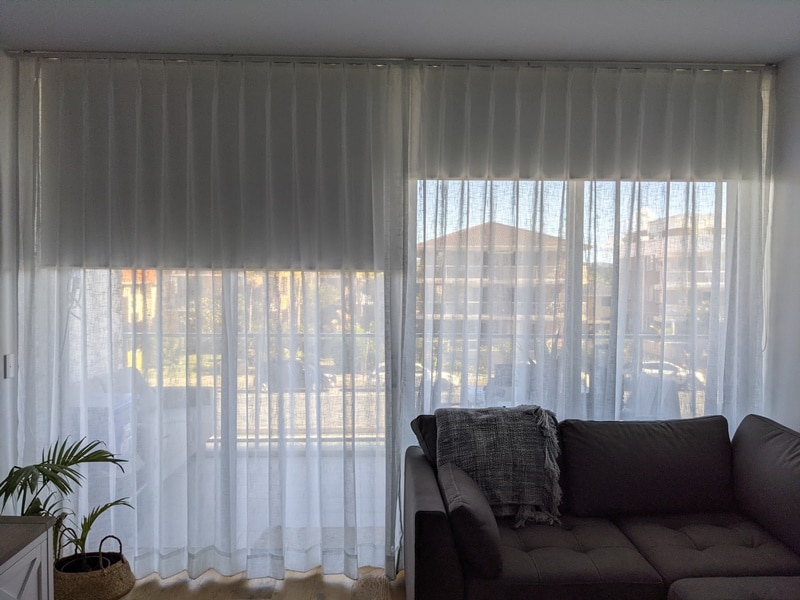 | Sheers ₹2000 Product Overview D'Decor Seamless Sheers represent the pinnacle of modern window treatments. View product → |
A decision rule for choosing seamless or joined standard sheers
Choose seamless construction when an uninterrupted view across a broad opening matters more than fabric choice, budget, or easy repair. Choose standard joined sheers when the opening is narrower, a preferred fabric is unavailable in wide width, or practical servicing matters more than eliminating one vertical join.
| Option | Visual and construction result | Choose it when |
|---|---|---|
| Seamless wide-width sheer | One continuous width, fewer panels, and no join interrupting daylight; installation needs sufficient fabric width, stack-back space, and careful handling | The opening is broad, the sheer is plain and translucent, and the join would remain visible from close seating |
| Standard joined sheer | Multiple narrower widths joined vertically; the seam can show in strong backlight, but replacement and local repairs are simpler | You need more fabric designs, a lower material cost, or a width that does not justify wide-width handling |
| Either option | Appearance still depends on colour, density, fullness, heading, and cleaning access | You are comparing privacy, daylight, automation weight, and after-sales service rather than seams alone |
The phrase best curtains shop seamless sheers versus standard sheers in Delhi should lead you to compare the finished installation, not only the metre rate.
Ask the best curtains shop in Delhi for sheers to show a sample at window distance and state the maximum finished width, panel count, joining charge, cleaning method, and repair terms in writing.
Seamless is not automatically better. Select it for visual continuity; select joined sheers when flexibility and serviceability win.
Frequently asked questions
What is the difference between seamless sheers and standard sheers?
Seamless sheers use wide-width fabric to cover a broad opening without a vertical joining seam. Standard sheers use narrower widths, so wider windows need stitched panels.
How do I calculate usable width for sheer curtains?
Measure the installed track or rod width, then account for the fullness ratio and the fabric’s usable width. Include returns, overlaps and any side clearance before ordering.
What should I compare in a Delhi curtains shop quotation?
Check the fabric’s usable width, finished dimensions, fullness, number and position of joins, heading style, track or rod, installation, GST and alteration charges.
When should I choose seamless sheers over joined standard sheers?
Choose seamless sheers when an uninterrupted appearance matters across a broad opening. Choose joined standard sheers when you need more fabric options, a smaller opening or a lower-complexity installation.
Keywords