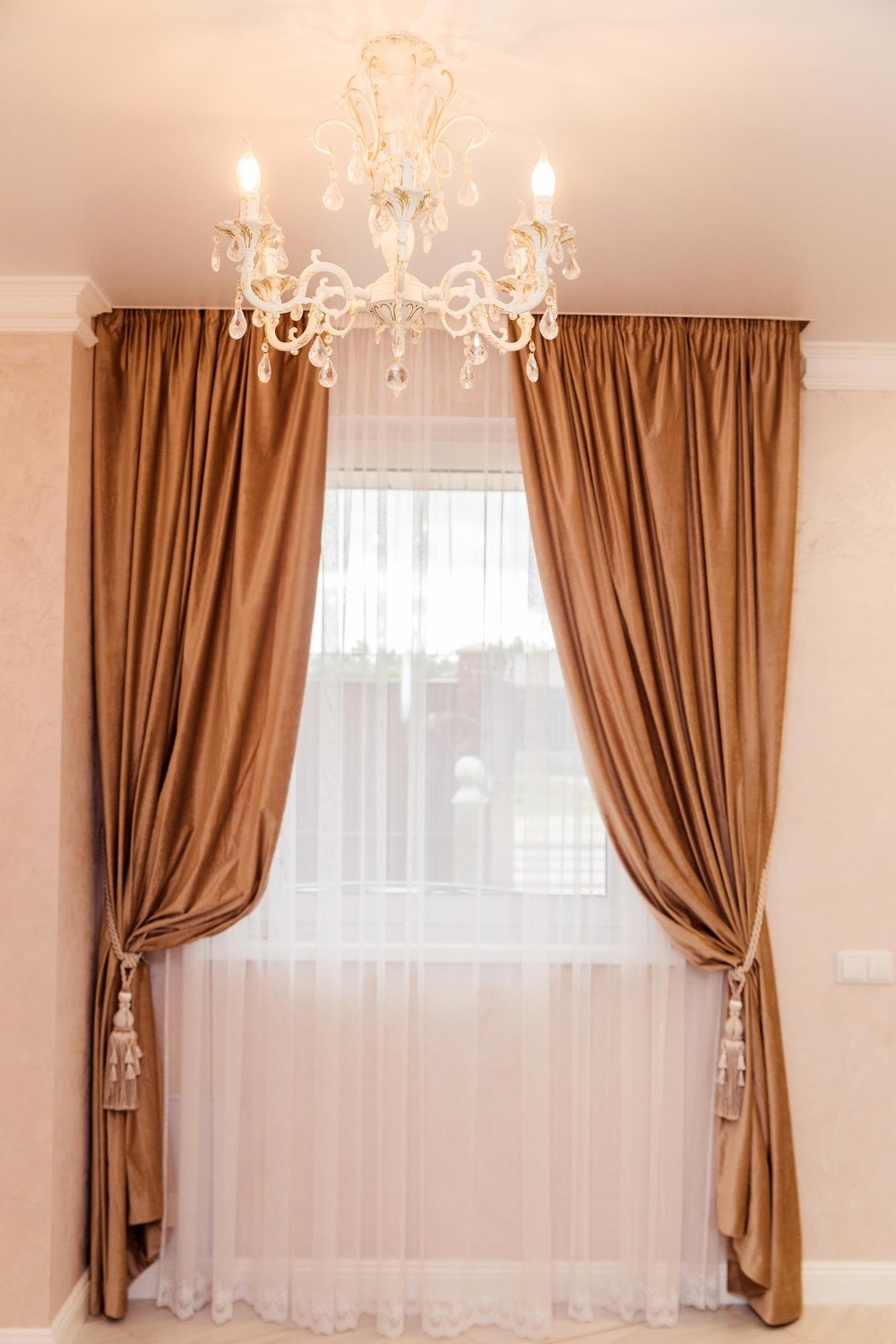
Choosing silk curtains involves more than selecting a colour from a small fabric sample. You need to verify the fibre, compare silk constructions, account for sunlight and privacy, calculate the finished dimensions, and match the assembled weight to suitable hardware and care requirements.
Key takeaways
- Check fibre content; satin describes the weave, not the material.
- Use lined silk in bright rooms to reduce fading and protect the fabric.
- Measure the window, rod and desired drop before ordering custom curtains.
- Choose curtain fullness based on the fabric weight and desired drape.
How to Tell Real Silk from Satin, Rayon and Blends
Check the fibre label before judging colour or shine: “100% silk” identifies the fibre, while “satin” identifies a weave and proves nothing about fibre content. A label stating polyester, rayon, or percentages describes an imitation or silk blend fabric rather than pure silk.
1. Read the fibre content. Look for “100% silk” or “pure silk,” not simply “satin,” “silky,” or “silk touch.” Rayon curtains can feel soft and fluid, while silk versus polyester satin becomes clearer when the label names polyester.
2. Examine the surface in daylight. Genuine silk has a soft, changing lustre rather than a uniform plastic shine. Tiny slubs, fine irregularities, and slight differences in thread thickness support authenticity, although highly finished silk can look very even.
3. Scrunch a small edge and release it. Silk develops temporary fold lines and feels warm, light, and slightly crisp; polyester tends to spring back with a smoother, cooler feel. This is a clue, not proof.
4. Treat a burn test as a laboratory check, not a home experiment on real silk curtains. Silk burns slowly, smells like singed hair, and leaves brittle ash, but rayon burns more like paper and blended fibres produce mixed results. Ask for an independent fibre test when the label is missing or doubtful.
Which Silk Construction Suits Your Room and Draping Style?
The construction determines whether a panel hangs crisp and architectural or soft and flowing. Compare the fabric’s weight and fall with your heading, track, pole and lining; interlining and blackout backing can make even a medium-weight silk heavy enough to require structural fixings.
| Construction | Weight and texture | Resulting fall |
|---|---|---|
| Raw silk | Medium weight, matte, with visible slubs and uneven colour | Relaxed, softly structured; ideal when natural variation is welcome |
| Dupioni | Medium to heavy, crisp, with pronounced horizontal slubs and a subtle sheen | Holds pleats and shape; dupioni silk curtains look formal rather than fluid |
| Taffeta | Light to medium, smooth, crisp and rustling | Sharp folds with strong body; silk taffeta suits tailored panels |
| Jacquard | Medium to heavy, woven with raised or contrasting patterns | Full, substantial drape; silk jacquard curtains need generous support |
| Silk blends | Weight and texture vary with polyester, linen or rayon content | More predictable or durable, but often less fluid and less luminous than pure silk |
| Habotai | Lightweight, smooth and closely woven | Soft, fluid fall; needs lining and careful support to avoid a flimsy appearance |
Inspect dupioni, shantung and raw silk samples in motion, not only flat: slubs, shade variation and seam differences are weave characteristics, not automatic defects. A heavily textured fabric or patterned jacquard can also require different fullness calculations than the usual 2 to 2.5 times the track width.
Choose Silk for Sunlight, Privacy and Different Room Uses
Bedroom windows need privacy after dark, so silk curtains for bedrooms should include an opaque lining or sit with a separate blind. A darker face fabric alone will not stop silhouettes when lamps are on.
| Room or window | Specification | Reason |
|---|---|---|
| Bedroom | Opaque lining or curtain-plus-blind arrangement | Prevents night-time visibility and controls morning light |
| Living room | Protective lining, with a sheer only where daytime privacy is needed | Preserves the silk while balancing daylight and outlook |
| Dining room | Lined panels, especially beside bright windows or candles | Reduces fading and protects against accidental marks |
| High-sun window | Full lining and hardware that keeps fabric away from prolonged direct exposure | Ultraviolet light fades dyes, yellows silk and weakens fibres |
Silk curtains for living rooms suit rooms where texture and fall matter, but unlined panels are a poor choice on a west-facing window. Ask for the actual silk-and-lining combination to be assessed, not just the face fabric.
Treat “sun-resistant silk curtains” as a claim to verify, not a guarantee. For silk curtain privacy, specify an opaque backing, second shade or double-curtain arrangement; test the closed treatment from outside at night with the room lights on.
Protect dining-room panels from food and drink because silk is weaker when wet and water marks can become permanent.
Select Colour and Layering for Daylight and Evening Light
Colour choice begins with a large sample, not a thumbnail: view silk curtain colours beside the wall, flooring and upholstery in daylight, under warm lamps and under cool LEDs. Ivory can look yellow at night, grey can turn blue, and saturated dyes often appear deeper in folds.
Keep the sample at the actual window for a full day before ordering.
| Treatment | Daylight and evening effect | Choose it when |
|---|---|---|
| Unlined panel | Shows the silk’s texture and admits the most light; offers little night privacy | The window is shaded and privacy is not required |
| Standard lining | Softens glare, protects silk from ultraviolet exposure and improves night privacy | You want protection without a rigid, heavy curtain |
| Interlining | Adds body, insulation and fuller folds between silk and lining | Lightweight silk needs shape or extra warmth |
| Blackout backing | Blocks most incoming light, though seams, side gaps and the rod area can leak | A bedroom or media room needs darkness |
| Separate sheer | Filters daytime views while silk supplies decorative fullness | You want flexible privacy and daylight control |
Silk curtain lining is not automatically blackout. Combining interlining with blackout backing creates a heavier, stiffer treatment that can flatten lightweight silk; confirm that the track, pole, brackets and wall anchors support the assembled weight.
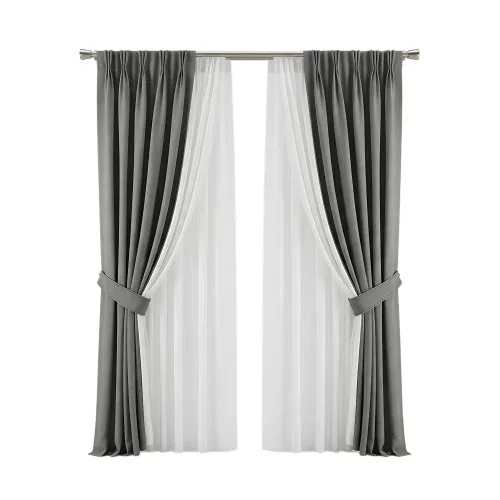
Silk curtains with sheers give the most adaptable arrangement: close the sheer by day, then draw the silk at night. In a sunny window, avoid an unlined panel; ultraviolet exposure fades dyes, yellows silk and weakens the fibre.
Measure Width, Length, Fullness and Hardware Before Ordering
1. Measure the track or pole width, not the glass alone. Add the planned curtain stack-back space beyond each side of the window, then calculate silk curtain fullness at roughly 2 to 2.5 times the finished track or pole width.
Divide the resulting fabric width between panels; pattern repeats, wave headings and heavy linings can change the calculation.
2. Measure length from the top of the heading or rings to the finished floor. For a clean silk installation, specify a hem that just touches the floor or ends 1 cm above it. Avoid puddling: it consumes more fabric, gathers dust and puts crushing and abrasion at the hem.
3. Confirm the curtain stack-back space before ordering. A full panel can cover part of the glazing when open, so reserve clear wall space beside the window; a narrow side return may need a slimmer heading or split stack. Include returns, overlaps and the pole’s finials in the drawing.
4. Weigh the complete treatment, including silk, lining, interlining and blackout backing. Match that load to the track, pole, brackets and wall substrate, fixing brackets into framing or using anchors rated for the assembled weight.
Ask Blinds N Curtains to record these measurements and test the actual layered construction before silk curtain installation, since layers can shrink, pucker or move differently after cleaning.
Related product
 | Silk Curtains Transform your space with the timeless elegance and rich texture of custom silk curtains from Blinds N Curtains. View product → |
Compare Silk with Linen, Cotton, Velvet and Synthetic Alternatives
Silk is the right choice when luminous colour, elegant drape and a formal finish matter more than simple cleaning. Choose another fabric when windows face strong sun, children or pets, damp condensation, radiators or frequent handling.
| Option | Advantages | Main drawback | Best choice |
|---|---|---|---|
| Silk versus linen curtains | Silk is smoother and more fluid | Silk marks, fades and abrades more easily | Formal rooms with controlled light |
| Cotton | Softer, practical and easier to live with | Less lustre and structure | Bedrooms and everyday interiors |
| Silk versus velvet curtains | Silk feels lighter and reflects light | Velvet provides more insulation and hides handling marks | Silk for elegance; velvet for warmth and acoustic weight |
| Synthetic alternatives | Polyester and acrylic resist creasing and offer washable curtain fabrics | They can look less natural and drape differently | Busy rooms, rentals and strong-sun windows |
Silk curtain maintenance requires the care label, gentle handling and a cleaner experienced with silk window treatments. Do not soak panels or use household detergent: wet silk weakens and can develop permanent tide lines. Roll or loosely fold finished panels with acid-free tissue, never compress them or drag hems across the floor.
Ask a professional workroom to test the actual silk, lining, interlining and proposed cleaning method before production. This catches shrinkage, dye bleeding, puckering and layer movement that a small hanging sample cannot reveal. Keep silk clear of heat sources and condensation; choose a floor-skimming hem instead of puddling to reduce crushing, dust and abrasion.
Frequently asked questions
How can you tell real silk from satin, rayon and blends?
Read the fibre label: 100% silk identifies pure silk, while satin describes a weave. Polyester, rayon or stated percentages indicate an imitation or blend.
Which silk construction suits different draping styles?
Lightweight silk creates a fluid, relaxed drape, while heavier constructions produce fuller folds and a more structured appearance. Match the fabric weight to the pleat style and room.
How should you choose silk curtains for sunlight and privacy?
Use a lining or layer silk with sheers when windows receive strong sunlight. Add a blackout lining when you need substantial privacy or bedroom darkness.
How do you measure silk curtains before ordering?
Measure the installed rod or track width, the distance from hardware to the finished hem, and the required fullness. Confirm stack-back space and lining details before placing the order.