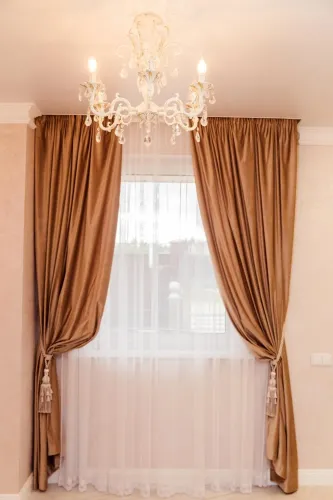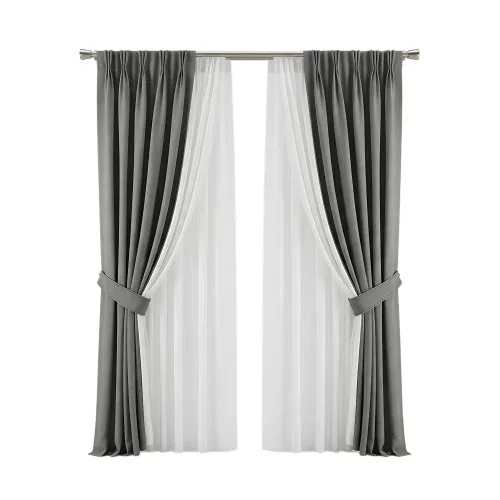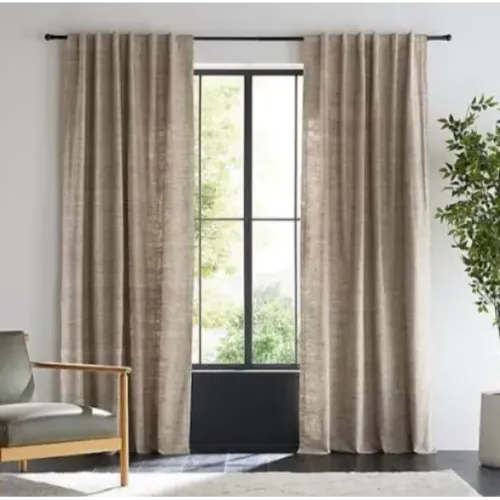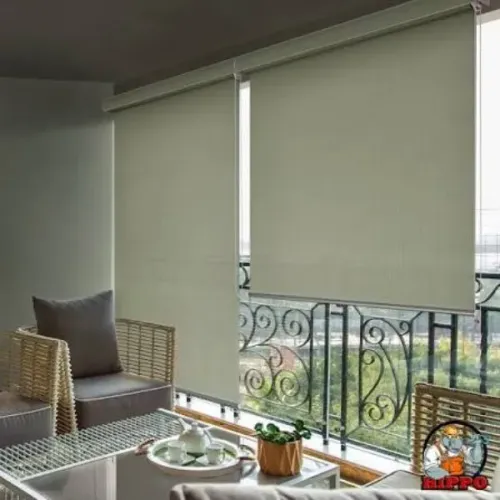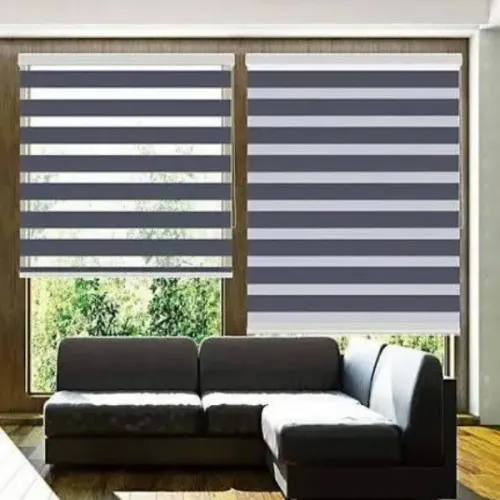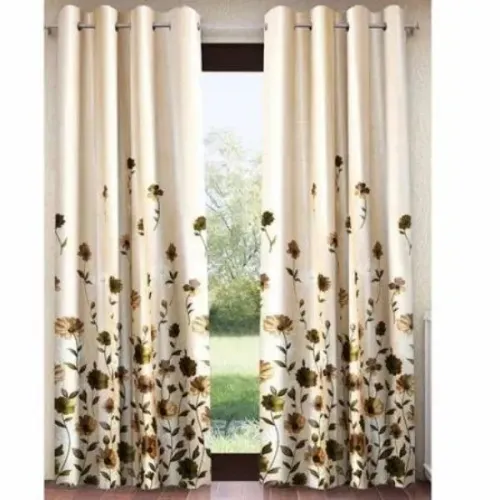
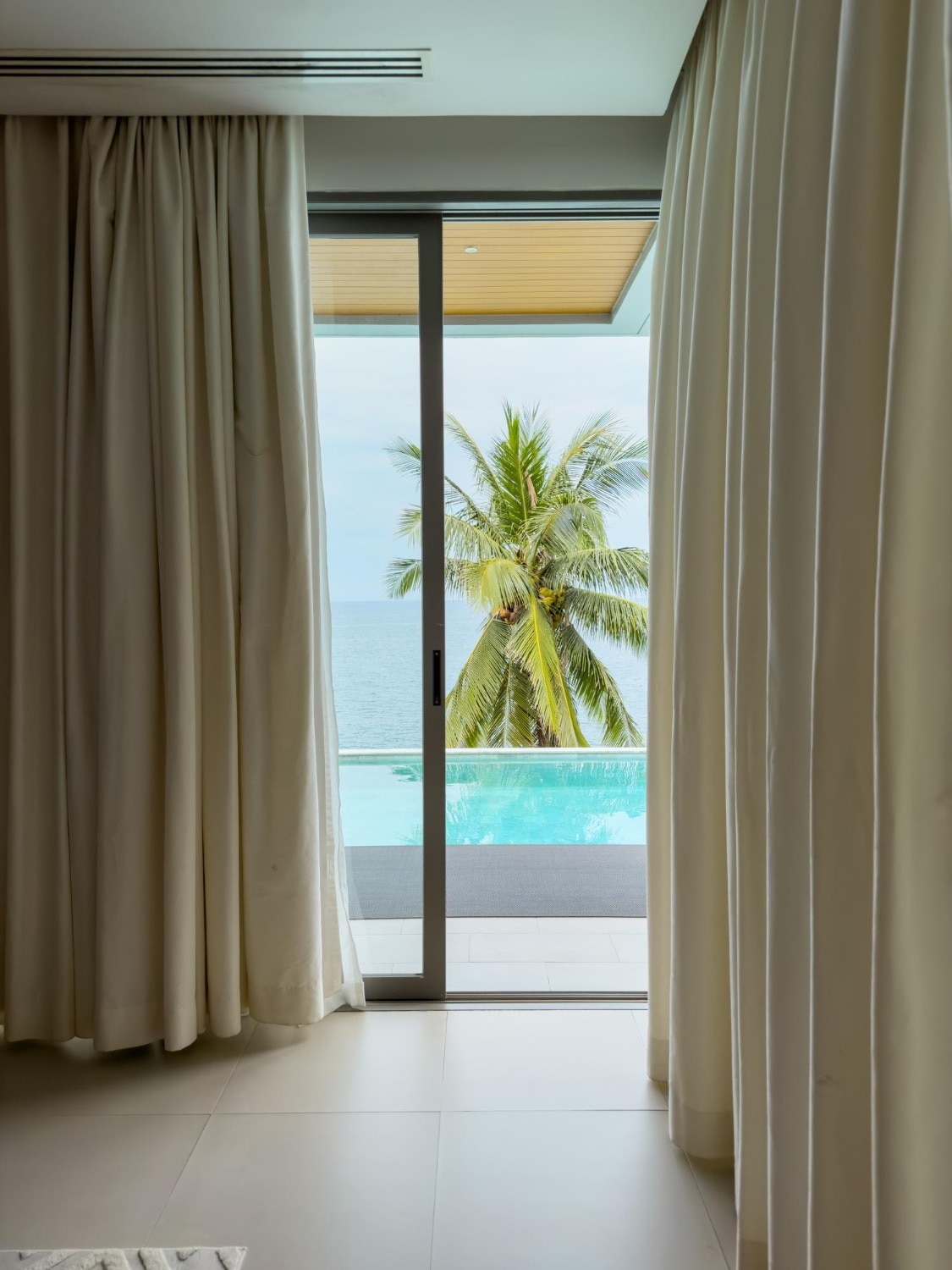
Direct sunlight creates several separate problems: glare on screens, fading fabrics, uncomfortable heat, and loss of privacy. By the end, you will be able to identify what “sunblock curtain” means, choose the performance you actually need, and specify the fabric, backing, coverage, and operation that suit your windows.
Key takeaways
- Identify the curtain’s lining, weave or coating before judging its sun-blocking performance.
- Use blackout construction for darkness; choose reflective or solar fabric for heat and glare control.
- Measure the sun’s direction and window coverage before selecting curtain width and mounting position.
- Specify light control, privacy, heat reduction and room style together for a better-fitting treatment.
What “sunblock curtain” means—and what it should do
“Sunblock curtain” is a marketing label, not a defined product category. A useful sunblock curtain definition must identify its construction: it could be blackout drapery, a curtain with reflective lining, tightly woven solar fabric, or coated fabric, and each handles light, heat, and visibility differently.
Judge the curtain by the result you need, not by the word “sunblock” on the packaging.
- For darkness, look for blackout or room-darkening performance. Blackout fabric blocks nearly all visible light through the material; a regular lining does not.
- For glare and heat, ask for solar reflectance, solar transmittance, or a tested solar-control rating. A white or reflective backing can return more sunlight toward the glass, while a decorative face fabric alone reveals little.
- For preserved daytime visibility, choose a solar-screen construction with a stated openness factor. It reduces glare and solar radiation but will not make the room fully dark.
- For privacy, check the fabric from both sides in daylight and after dark. A translucent solar fabric can preserve an outside view while still exposing silhouettes when interior lights are on.
- For ultraviolet protection, ask whether the claim applies to the curtain fabric, the lining, or the complete window covering. UV reduction does not automatically mean lower room temperature.
A sample viewed against the actual sunny window is more informative than colour, weight, or the “sunblock” label alone.
Match the curtain construction to the problem
Choose the backing before the decorative face: two fabrics with the same colour and weight can transmit very different amounts of solar energy.
| Goal | Construction to choose | Trade-off |
|---|---|---|
| Heat reduction | Medium-weight face fabric with a white reflective backing, or a coated solar fabric; keep gaps small | A dark versus light curtain is less important than the backing, but a light exterior-facing surface reflects more heat |
| Glare control | Tightly woven fabric or a low-openness solar screen rated around 1% or 3% | Stronger glare reduction means less daylight and a weaker view |
| UV protection | UV protection curtains with a tested ultraviolet transmission or filtration value, plus a dense weave or lining | “Blocks UV” without a test value does not tell you how well furnishings are protected |
| Daytime privacy | 1% or 3% openness, with the room darker than outdoors | Privacy reverses at night when interior lights are on; use a lined or opaque layer |
| Preserved view | 5% openness solar fabric or a more open weave | You retain more daylight and scenery but accept more glare, heat, and daytime visibility from outside |
For direct sun, choose a light-reflective backing and a face fabric selected for appearance; the face alone does not determine performance. A tightly woven, multi-layer construction gives stronger privacy than a loose decorative weave.
Use an opaque or blackout layer only when darkness matters more than the view. Heavy coated blackout fabric can trap heat against the glass, so ventilate that cavity or consider exterior shading on severely exposed windows.
Sunblock curtains compared with other window treatments
A sunblock curtain is the better choice when you want adjustable heat and glare control with a softer, decorative finish; it is worse when you need guaranteed darkness, an unobstructed view, or sunlight stopped before it reaches the glass.
| Option | Better choice when | Worse choice when |
|---|---|---|
| Sunblock curtains versus blackout curtains | You want daylight filtering, flexible opening, and reduced glare | You need near-total darkness for a bedroom, projector, or shift-work sleep |
| Sunblock curtains versus thermal curtains | You prioritise solar control and appearance over insulation | Winter heat loss, drafts, or temperature stability matter most |
| Solar screen blinds | You want daytime glare reduction while retaining an outside view | You need night privacy; interiors become visible when lights are on |
| Roller blinds | You need a compact, precise fit with easy automation | You want full-height softness, sound absorption, or layered decoration |
| Lined drapes | You want a lighter, simpler panel | You need the lining’s added body, privacy, or insulation |
| Window film | You want constant solar filtering without daily operation | You rent, want changing control, or need nighttime privacy without another layer |
| Exterior shading | You need the strongest heat reduction because it blocks sun before glazing | Building rules, wind exposure, or installation access rule it out |
The practical choice between sunblock curtains versus blackout curtains depends on whether glare or darkness causes the bigger problem. Heavy blackout fabric can trap hot air against the glass, while a reflective lining or exterior shading reduces that risk.
If operation is inconsistent, a modest automated treatment can outperform a higher-performance curtain left open during peak sun.
Install and operate the treatment for the window’s actual sun
Install for the sun’s path, not merely the window’s dimensions. East-facing windows need protection before and during the morning; west-facing windows need it through the hot afternoon. South-facing windows in Delhi receive strong direct sun across much of the year, with a lower winter angle that can send rays deep into the room.
- East-facing windows: close the curtain before sunrise or as soon as direct light reaches the glass.
- South-facing windows in Delhi: use full-height coverage and close it before peak daytime exposure.
- West-facing windows: close the treatment before afternoon sun enters, rather than waiting for glare or heat.
Mount the track or rod as close to the ceiling as practical, extend it beyond both jambs, and take the fabric to the floor or sill. Full curtain installation coverage limits light spilling over the top, underneath, and at the sides.
Add side returns and an overlapping centre closure; a loose panel with exposed edges lets sunlight and heated air bypass the fabric.
Operate the treatment every day the glass receives direct sun. A timer, sensor, or routine linked to sunrise and afternoon exposure prevents a high-performance fabric from being left open during the critical hours.
Check the closed curtain from the room: bright strips at the edges, centre split, or top reveal identify gaps that reduce glare and heat control. Choose cordless or properly tensioned controls where children can reach them.
Turn the specification into a treatment that fits the room
Ask a supplier or installer to write the room’s requirements into the sunblock curtain specifications. Measure glass width and height, recess depth, track or rod length, handle and radiator clearance, and the space available at each side. Record window direction and the hours of direct sun.
| Priority | Demonstrate | Document |
|---|---|---|
| Heat reduction | Compare reflective backing with an unlined sample at the window | Solar energy transmission, lining and coating construction |
| Glare and view | Show the view from the usual desk or sofa at peak sun | Visible light transmission and openness rating |
| Darkness | Close a sample and inspect light at the edges | Blackout status, overlap and return dimensions |
| Fading protection | Explain the face fabric, backing and test method | Ultraviolet transmission or filtration data and fading resistance |
Demand a full-size sample at the actual window, not only a hand-sized swatch. Check its colour indoors, outside appearance, heat at the glass and whether the selected fullness leaves gaps when drawn.
- Request the product data sheet, cleaning instructions, warranty exclusions and installation drawing.
- In homes with children or in childcare rooms, specify cordless or wand-operated hardware. Document cord safety and follow the manufacturer’s tensioning instructions.
- For commercial premises, identify the adopted fire code and obtain the textile test report. NFPA 701 tests flame propagation; it does not approve every curtain for every occupancy.
Blinds N Curtains can use this checklist to prevent a blackout or thermal-lined treatment from being chosen when the room needs preserved daylight and an outside view.
Related products
 | Thermal Insulated Curtains At Blinds N Curtains, our Thermal Insulated Curtains are expertly designed to transform your home into an energy-efficient sanctuary without... View product → |
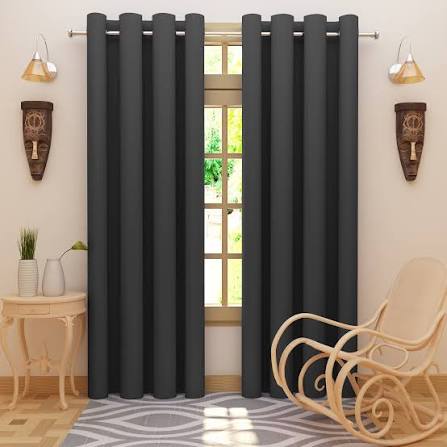 | Blackout Curtains at Blinds N Curtains offer the ultimate fusion of absolute privacy, light control, and sleek window styling. View product → |
Frequently asked questions
What does “sunblock curtain” mean?
It is a marketing label rather than a defined product category. The curtain may use blackout drapery, reflective lining, tightly woven solar fabric or coated fabric.
Which curtain construction is best for direct sunlight?
Choose blackout drapery for darkness, reflective lining for solar heat and glare, tightly woven solar fabric for filtered light, or coated fabric for stronger light blocking.
How do sunblock curtains compare with other window treatments?
Curtains can combine light control, insulation, privacy and decorative coverage, while blinds and shades offer different levels of adjustment, stack size and visual style.
How should you install curtains for the window’s actual sun?
Track the window’s sun exposure by time of day, then cover the full glass area and reduce side and top gaps with suitable mounting, width and overlap.