A silk blind can look refined in one room and impractical in another, depending on its fibre content, construction, lining, exposure to sunlight, and frequency of use. By the end, you will know how to identify the fabric, choose the right blind format, test the finish against your interior, and specify privacy, maintenance, and safety requirements before ordering.
Key takeaways
- Choose Roman or roller formats based on fold detail and fabric handling.
- Add lining or interlining to improve stability, privacy and light control.
- Use silk where texture and finish matter more than low-maintenance durability.
- Compare silk with linen, polyester and standard roller fabrics before specifying it.
What Counts as a Silk Blind?
A silk blinds definition is a fabric window shade with silk on its visible face, rather than a conventional blind with rigid horizontal slats. It is usually made as a Roman blind or roller blind; the lining, interlining, battens, tube and headrail provide much of its stability and operation.
Silk is the face material, not necessarily the whole construction.
Check the fabric specification, not the surface appearance:
- Genuine silk blinds should state 100% silk and identify the silk type, such as mulberry or tussar. The document should also name the lining, opacity, cleaning method and UV limitations.
- Silk blend blinds must show the exact fibre percentages, such as 70% silk and 30% linen. Do not accept “silk blend” without a composition label.
- A silk-look polyester fabric should state 100% polyester, or identify any other manufactured fibre used. Its sheen can resemble silk, but its composition is different.
- A woven fabric with slubs, slight colour variation or small irregularities can still be genuine silk; these are normal characteristics of a natural filament fibre.
- Ask for a physical sample and a written composition certificate. Do not rely on names such as “silky,” “silk effect” or “luxury silk.”
Unlined silk remains translucent, so it cannot deliver true blackout conditions by itself. Specify a blackout or room-darkening liner when you need strong privacy, reduced solar transmission or darkness after sunset.
How Silk Produces a Premium Finish
Silk looks refined because its smooth filament structure reflects light rather than absorbing it flatly. That creates a premium silk finish with a gentle sheen, shifting highlights, and silk colour depth that changes as daylight moves across the window.
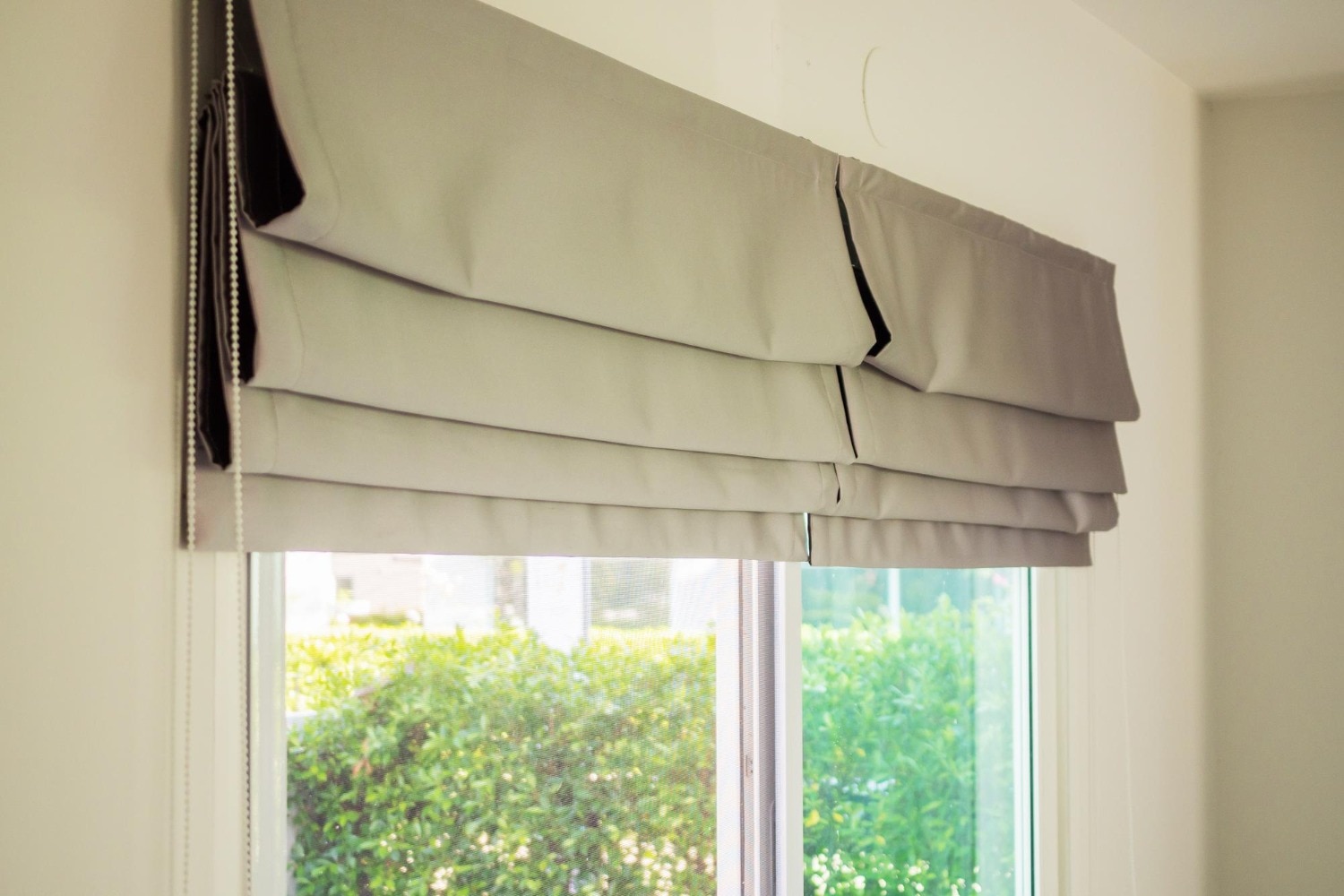
The surface is not perfectly uniform. Small slubs, slight colour variation, and natural irregularities are normal in genuine silk, while a silk-look synthetic often appears more consistent. In a Roman blind, these qualities become especially visible in the folds: the light-catching fabric produces soft highlights on raised sections and deeper tones in the recesses.
| Quality | What you see | What to test |
|---|---|---|
| Sheen | Controlled reflection instead of a plastic gloss | View the sample in direct daylight and under warm evening lamps |
| Colour depth | The shade appears lighter or darker as you change position | Hold the swatch vertically, then view it from the side and at different distances |
| Silk blind texture | Fine smoothness, slubs, or woven variation | Run your fingers across the sample and inspect it against a plain background |
| Fold behaviour | Highlights and shadows follow each fold | Ask for a full-width sample or photograph the fabric folded in the proposed format |
Test the fabric in your actual room, not only in a showroom. Place a large sample against the window in the morning, afternoon, and after sunset; strong backlight can reveal translucency, while warm lamps can exaggerate yellow or bronze tones.
Also inspect the proposed opening from several angles. An inside-mounted blind exposes light gaps at an out-of-square window, and patterned or slubbed silk can make uneven panel alignment obvious. Confirm the window measurements, pattern repeat, finished drop, liner, and hardware clearance before fabrication.
Choosing the Blind Format, Lining and Light Control
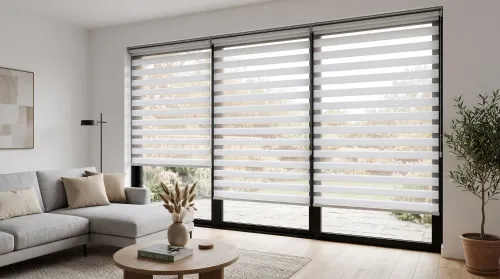
Choose silk Roman blinds for structured folds, silk roller blinds for a clean plane, and silk panel blinds for wide openings that need broad vertical movement. Your lining then determines whether the fabric merely filters daylight or protects privacy and controls glare.
| Format | Folds and operation | Privacy and sunlight control |
|---|---|---|
| Silk Roman blinds | Horizontal folds stack visibly when raised; cord, chain, or motorised operation | Unlined silk filters light but remains translucent; add lining for stronger privacy and reduced solar transmission |
| Silk roller blinds | Smooth, uninterrupted surface rolls around a tube and takes little window depth | A room-darkening lining improves privacy; blackout lining for silk blinds blocks light through the fabric, though side gaps can remain |
| Silk panel blinds | Large fabric panels slide along a headrail and stack to one side or both sides | Lined panels soften daylight and improve privacy across wide glazed openings, but overlapping panels can leave slight seams |
Select a blackout lining when bedrooms, media rooms, or street-facing rooms need darkness after sunset. It adds thickness and weight, so confirm the roller diameter, Roman blind stack height, mounting depth, and operating clearance before fabrication.
A standard lining gives silk more body while retaining some daylight; a thermal or coated lining reduces heat and glare further but can mute silk’s colour and surface reflection. Ask for the finished sample with the chosen lining behind it, viewed in both direct sun and evening room light.
Where Silk Blinds Work Best—and Where They Do Not
Silk blinds work best in dry rooms with stable temperatures, limited handling, and controlled daylight. Silk blinds for bedrooms create a soft, private finish, while silk blinds for living rooms suit formal or low-traffic spaces where their changing sheen can be appreciated.
| Room | Suitability | Main reason or warning |
|---|---|---|
| Silk blinds for bedrooms | Strong fit | Choose a lining for privacy and protection from direct morning or afternoon sun. |
| Silk blinds for living rooms | Strong fit | Keep them away from frequent contact, pets, and unfiltered south- or west-facing sunlight. |
| Silk blinds for bathrooms | Poor fit | Condensation can leave water marks, distort the fabric, bleed dyes, or encourage biological deterioration. |
| Silk blinds for kitchens | Usually poor fit | Steam, grease, splashes, and repeated cleaning can permanently stain untreated silk. |
| Children’s rooms and pet areas | Poor fit | Pulling, rubbing, claws, and accidental spills exceed silk’s limited abrasion and moisture tolerance. |
| High-traffic commercial spaces | Poor fit | Frequent handling and cleaning demand a harder-wearing textile; request flame-performance documentation for any commercial installation. |
A silk-look polyester or verified silk blend is a better choice when wiping, moisture resistance, or daily operation matters more than natural fibre character. Check the composition label rather than trusting a fabric’s appearance.
A sunny room is not automatically unsuitable: use a protective lining and limit direct exposure. If the supplier does not approve the silk fabric for a damp, greasy, or intensely sunlit environment, specify another material.
Compare the Alternatives Before You Specify Silk
Choose silk only if the finish justifies its higher care and cost. Silk blinds versus curtains: blinds occupy less wall space and give a cleaner, tailored profile, while curtains create fuller folds, stronger insulation, and easier layering for privacy.
| Option | Appearance | Privacy | Durability | Upkeep | Relative cost |
|---|---|---|---|---|---|
| Silk blinds | Lustrous, refined, with visible fold or surface variation | Good with lining; weak when unlined | Sensitive to abrasion, moisture, and strong sun | Gentle cleaning; avoid frequent handling | High |
| Silk curtains | Deeper drape and movement; more theatrical | Very good when lined and closed fully | Better hanging protection, but still moisture-sensitive | Professional cleaning is common | High to very high |
| Velvet | Dense, matte-to-sheen surface with substantial folds | Very good | More abrasion-tolerant than silk, but heavy | Vacuuming and careful cleaning | High |
| Linen | Dry, relaxed texture with natural slubs | Medium unless lined | Stronger everyday tolerance, but creases easily | Pressing and dust control | Medium to high |
| Polyester blinds | Consistent colour and silk-like sheen | Varies by weave and lining | Strong resistance to wear and moisture | Simple dusting or spot cleaning | Low to medium |
| Wood blinds | Solid, architectural warmth | High when closed | Durable; humidity can warp some woods | Dusting; protect from moisture | Medium to high |
| Standard Roman or roller blinds | Practical, uniform finish | Varies from sheer to blackout | Usually more forgiving than silk | Straightforward routine cleaning | Low to medium |
Silk versus velvet favours silk for light-catching delicacy and velvet for resilience. Silk versus linen favours silk for polish and linen for relaxed practicality. The phrase silk versus polyester blinds should prompt a composition check: polyester wins on maintenance, while genuine silk wins on depth and irregular character.
Ask Blinds N Curtains to quote the fabric composition, lining, cleaning method, and mechanism separately; those details reveal the real comparison.
Frequently asked questions
What counts as a silk blind?
A silk blind is a fabric window shade with silk on its visible face, usually built as a Roman or roller blind. Its lining, interlining, battens, tube and headrail provide stability and operation.
How does silk create a premium finish?
Silk contributes a distinctive sheen, fine texture and rich colour response. The finished appearance also depends on accurate measuring, clean fabrication, suitable lining and professional installation.
Which blind format and lining should you choose?
Choose a Roman blind for visible folds and a roller blind for a flatter profile. Select the lining according to your needs for privacy, insulation, glare reduction and daylight control.
Where should you avoid silk blinds?
Avoid silk in spaces exposed to heavy moisture, intense direct sun, frequent abrasion or demanding cleaning conditions unless the fabric and construction are specifically suitable.