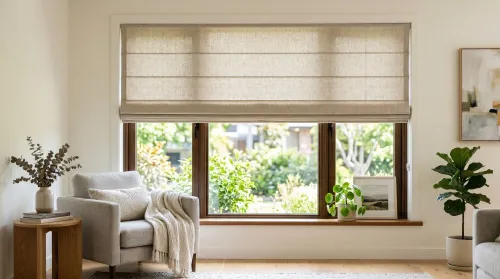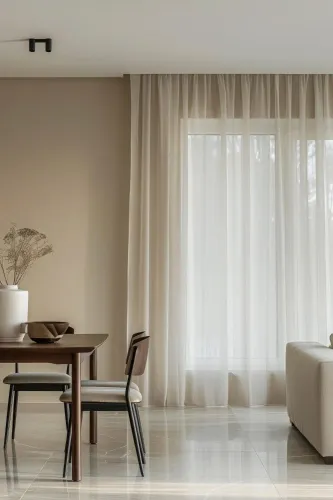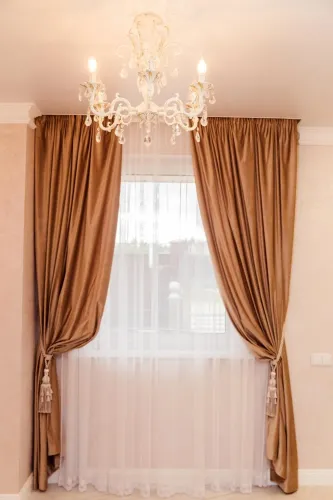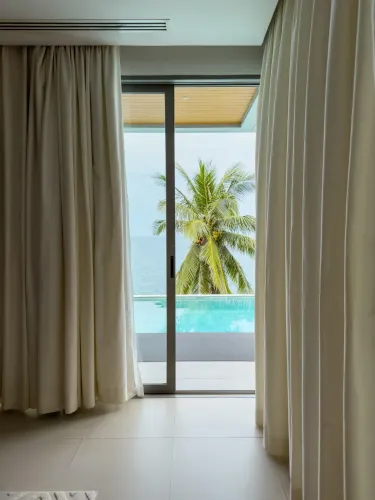
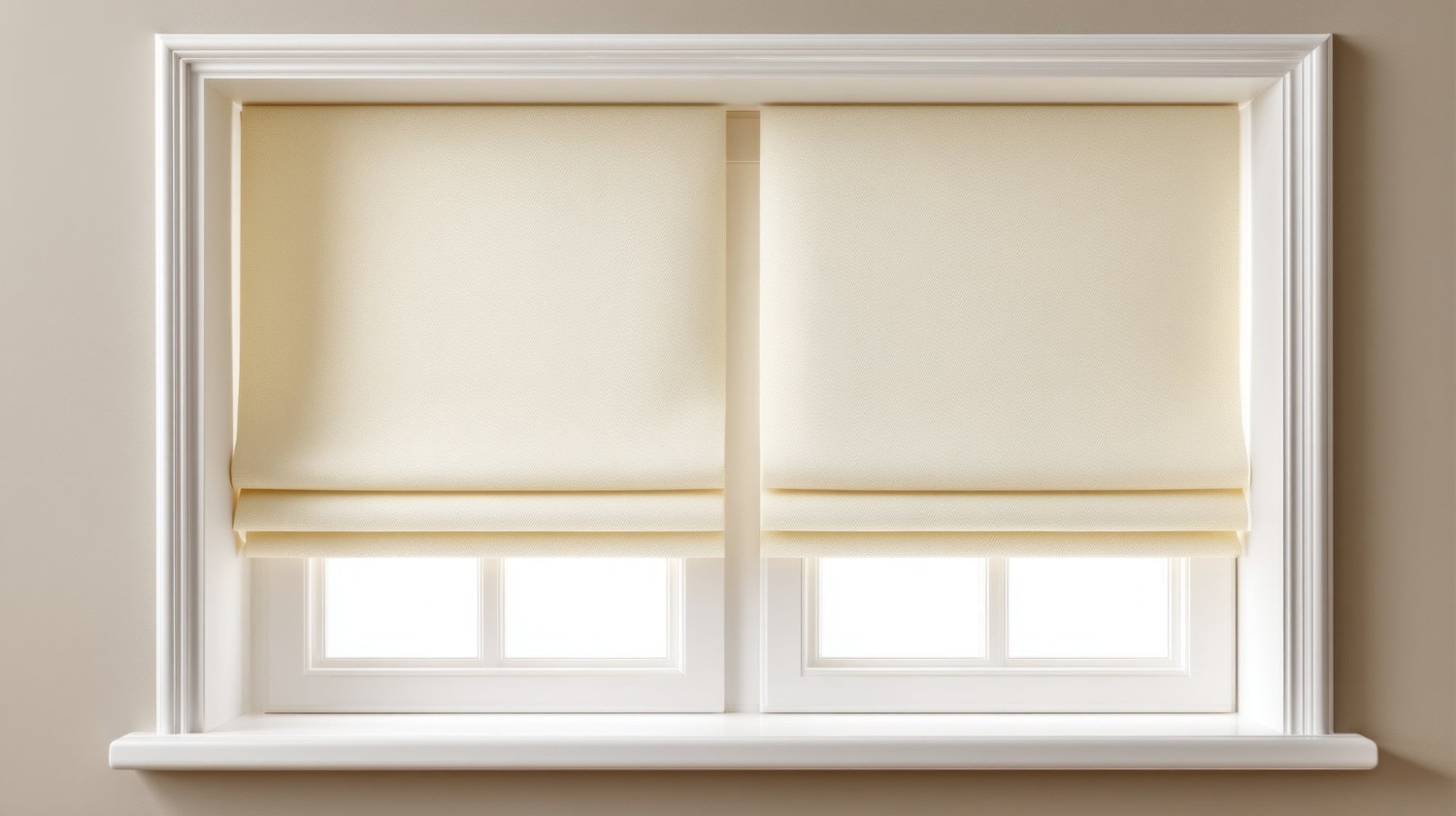
The right roller shade depends on more than colour: fabric openness, nighttime privacy, window dimensions, mounting position, and the way you use the room all affect the result. By the end, you will be able to compare roller shades with other window treatments, identify their limits, and prepare a more accurate specification for each window.
Key takeaways
- Choose openness factor by balancing glare control, privacy, and daylight.
- Measure the recess, glass, handles, and frame before ordering shades.
- Use blackout fabric for bedrooms and presentation rooms needing darkness.
- Compare chain, spring, and motorized operation against safety and access needs.
How Roller Shades Fit and Operate at the Window
A roller shade works by winding its fabric around a fabric tube held by mounting brackets. An operating chain turns the tube to raise or lower the fabric; motorized roller shade systems use a wall switch, remote, or automation instead. The roller shade mechanism keeps the fabric moving in a straight plane across the glass.
Mounting choice changes both appearance and performance.
| Mount | Fit | Choose it when | Trade-off |
|---|---|---|---|
| Inside mount | Fits within the window recess | The recess is deep, square, and clear of handles, locks, cranks, screens, and sash movement | Leaves a perimeter gap and needs adequate bracket and cassette clearance |
| Outside mount | Sits over the recess and overlaps the opening | The recess is shallow, irregular, obstructed, or you want to cover trim and reduce light gaps | Covers some trim and needs enough wall or frame space above and beside the window |
Inside-mounted shades usually look neater and preserve existing trim. Outside mounting can block more stray light, but a blackout fabric alone cannot seal gaps at the sides, top, and bottom.
Do not treat measurements as interchangeable: specify whether dimensions describe the finished shade or the window opening. Check the tube width, bracket clearance, sash movement, and handle position before ordering. A safety-conscious specification also replaces accessible looped cords with cordless controls or a properly selected motorized system where children can reach the window.
Choosing Fabric Density for Glare, Privacy, and Darkness
Fabric density determines whether you get a view, privacy, glare control, or darkness. Choose the shade for the room’s strongest problem, not simply its window size.
| Room | Best fit | Why and watch-out |
|---|---|---|
| Living room | Sheer roller shades or light-filtering fabric | Preserve daylight and soften glare; sheer fabric gives limited privacy after dark. |
| Kitchen | Light-filtering fabric | Cuts reflected glare while keeping the worktop visible; avoid very delicate fabric near heat, steam, and grease. |
| Bedroom | Dim-out roller shades | Reduce early-morning light and nighttime visibility without requiring total darkness. |
| Conference room | Dim-out roller shades | Improve presentation contrast and privacy; use blackout fabric when projectors must compete with strong daylight. |
| Screen-heavy office | Screen fabric or light-filtering fabric | Reduce direct glare and solar load while retaining a daytime view; occupants remain visible at night if indoor lights exceed outdoor light. |
Choose blackout roller shades with blackout fabric for shift-work bedrooms, nurseries, or projection rooms. A blackout material alone does not seal an inside-mounted shade: light still enters through side, top, and bottom gaps. An outside mount, cassette, or side channels closes more of those leaks.
Dense fabrics block more light but remove the view and can make a room feel enclosed. Roller shades also change coverage rather than redirecting light, so tilting blinds suit spaces that need precise directional control.
What Roller Shades Offer Compared with Other Window Treatments
Choose roller shades when you want a slim treatment that clears desks and countertops, stacks tightly, and repeats cleanly across several windows. Compared with curtains, they use less wall space and gather no fabric, but they cannot redirect light sideways. Raise the shade for a view; lower it for glare control and privacy.
| Option | Advantage | Trade-off |
|---|---|---|
| Roller shades | Compact, consistent, and easy to clean | Limited to coverage-based control; side gaps remain |
| Curtains | Soft appearance, insulation, sound absorption, and ventilation | Bulky stack and more fabric to wash |
| Roman blinds | Tailored fabric finish and useful insulation | Folded layers take space and collect dust |
| Venetian blinds | Tiltable slats redirect glare and admit air | Individual slats require regular cleaning |
| Wooden blinds | Warm finish with slatted light control | Heavier and unsuitable for persistently damp rooms |
| Zebra Blinds | Alternating bands vary daylight and privacy | More hardware and weaker blackout performance |
| Blackout curtains | Strong darkness and edge coverage | Largest stack and reduced window access |
The roller shades versus curtains decision usually turns on space, softness, and insulation. For a Roman blinds comparison, choose rollers for a cleaner, lighter profile rather than decorative folds. A blackout roller shade still leaks light at its top, bottom, and sides unless you add an overlapping outside mount, cassette, or side channels.
A Room-by-Room Decision Guide for Homes and Offices
Choose the shade by exposure, privacy, moisture, and how the room is used. A compact roller shade suits windows above desks or counters, but it cannot redirect light like tilting slats.
| Room or use | Recommended setup | Important limitation |
|---|---|---|
| Sunny room window shades | Solar screen fabric with a suitable openness factor; add outside mounting to reduce edge gaps | Deploy it during peak sun; uncovered glass still admits heat |
| Street-facing window privacy | Light-filtering fabric for daytime privacy, or a dual shade with a blackout layer | Screen fabric can reveal silhouettes at night when indoors is brighter |
| Bedroom | Room-darkening or blackout fabric, mounted outside the recess | Check side gaps around the fabric if darkness matters |
| Nursery roller shades | Cordless or motorized shade with secured controls and blackout fabric | Keep cords, loops, and accessible chains away from the cot |
| Bathroom and kitchen window treatments | Moisture-resistant, wipe-clean polyester or vinyl roller shade | Keep fabric clear of splashes, steam, grease, and direct heat |
| Rented home | Inside-mounted manual shade that fits the existing recess | Confirm drilling and bracket rules with the landlord |
| Office with screens | Solar screen or light-filtering shade to cut reflections without eliminating the view | Test the actual screen at midday and late afternoon |
| Office with a projector | Blackout shade, preferably outside-mounted with overlapping coverage | Any side gap can wash out projected images |
For tall, grouped, or hard-to-reach windows, motorization can schedule glare control, but plan battery access, charging, controls, and maintenance before ordering. Pair a daytime screen shade with curtains or a second shade when nighttime privacy matters.
Measuring Windows and Planning the Mounting Details
Measure the opening and every obstruction before ordering; dimensions for an inside mount are not interchangeable with those for an outside mount. How to measure roller shades depends on which fit you choose and whether the supplier wants opening measurements or finished-product dimensions.
1. For an inside mount, measure the width at the top, middle, and bottom of the recess. Record the narrowest width, then measure the height on both sides and in the centre. Check the window recess depth against the shade’s bracket or cassette requirement.
2. For an outside mount, measure the opening, trim, and the overlap needed to cover side gaps. Record the finished width and height requested by the supplier, including the cassette and bottom-bar position.
3. Check handle clearance, locks, window cranks, insect screens, mullions, and sash movement. A handle that projects into the fabric path can stop the shade from lowering or damage its edge.
4. Inspect the fixing surface above the opening. Plasterboard, masonry, timber trim, and ceiling recesses need different anchors and may not support the same bracket location.
Inside mount versus outside mount is a practical choice: use inside mounting for a neat recess fit, or outside mounting when the recess is shallow, uneven, obstructed, or needs better light-gap coverage. Blinds N Curtains can record these details as opening or finished-product dimensions so the order is not based on ambiguous numbers.
Related product
 | Roller Blinds Elevate your home's interior with premium roller blinds from Blinds N Curtains, where sleek modern design meets effortless functionality. View product → |
Operating, Cleaning, and Specifying Shades for Real-World Use
Cordless roller shades remove hanging-loop hazards in homes with children or pets. If you use a chain-operated shade, secure the loop with a fixed tension device and replace damaged chain or brackets immediately; a loose loop can entangle a child.
Effective roller shade cleaning starts with a soft brush or low-suction vacuum attachment, followed by a lightly damp cloth for marks. Do not scrub coated fabric, soak the roll, or force wet material onto the tube, because distortion and mildew can follow. Keep the fabric fully dry before raising it.
Motorized window shades suit tall, wide, or grouped windows where reaching a chain is difficult. Specify battery access, charging or replacement intervals, control compatibility, operating noise, and manual override before ordering. Automation can schedule glare control, but a correctly sized manual shade may cost less and require less servicing over its life.
Commercial specifications must identify the exact fabric, backing, cassette, and installation assembly rather than relying on a colour sample. Request NFPA 701 window-treatment documentation when the project specification or adopted building code calls for it, and confirm that the paperwork matches the supplied textile. “Commercial compliant” is meaningless without that project and jurisdiction check.
Frequently asked questions
How do roller shades fit and operate at a window?
Fabric winds around a tube held by brackets, while a chain, switch, remote, or automation raises and lowers the shade in a straight plane across the glass.
How do you choose roller shade fabric density?
Select fabric density based on glare, privacy, daylight, and darkness needs; blackout fabric suits bedrooms and rooms requiring controlled darkness.
What should you measure before ordering roller shades?
Measure the window recess or outside mounting area, then check the glass, frame, handles, sill, and bracket clearance for unobstructed operation.
How do roller shades compare with other window treatments?
Roller shades provide a compact, straight drop with adjustable light control, while curtains and blinds offer different levels of insulation, appearance, flexibility, and installation space.
How should roller shades be operated and cleaned?
Operate the chain or motor without pulling the fabric sideways, and remove dust with a soft brush or vacuum attachment before spot-cleaning the fabric according to its care instructions.