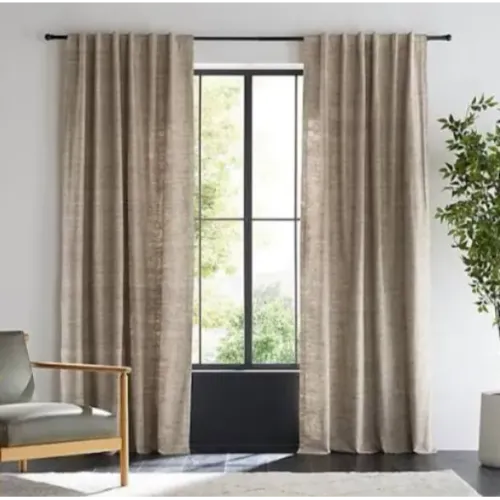

A curtain can look well made and still reduce daylight, obstruct a handle, leak light at the edges, or overload its track. By understanding the specification, measurements, heading, lining and installation details, you can choose a treatment that improves the room without creating new practical problems.
Key takeaways
- A proper survey records window recesses, obstructions, fixing points and control requirements.
- Fullness, heading style and stack-back determine how curtains hang and how much glass remains visible.
- Specify privacy, darkness, warmth and sound control as separate performance goals.
- Confirm measurements, fabric, lining, track, tolerances and installation details before ordering.
What makes curtains bespoke rather than simply custom-sized?
Bespoke curtains are designed and fabricated around your exact window, room and operating requirements. That is the practical bespoke curtains definition: the design solves the space, rather than simply altering a standard curtain’s width and drop.
| Option | What it means | Main limitation |
|---|---|---|
| Bespoke curtains | Fabric, heading, lining, panels, stack-back and hardware are specified for the room | More design decisions and a higher fabrication cost |
| Made-to-measure curtains | A selected design is adapted to supplied dimensions | It may not solve obstructions, pattern matching or unusual operation |
| Ready-made curtains | Fixed sizes and standard finishes | The fit, fullness and opening arrangement are limited |
The distinction in bespoke vs made-to-measure curtains matters when handles, cupboards, radiators or narrow side returns affect how the treatment must operate. A side return can preserve glazing, while split panels can make wide curtains easier to open; a suitable lining can improve privacy or light control.
Before approving a quotation, check that the custom curtain specification states:
- Finished curtain width and drop
- Number of panels and opening direction
- Heading style, fullness or pleat spacing
- Lining and pattern-matching method
- Track or pole position and fixing strength
- Whether each dimension describes the window, track, pole or finished curtain
Bespoke vs ready-made curtains is not a contest with one universal winner. A simple, rarely used window may need only a well-sized ready-made panel; bespoke design earns its value when appearance or operation depends on the window’s specific problems.
What happens during a proper curtain survey?
A proper curtain survey separates the measurements you can supply from those an installer must verify on site. A curtain measuring service should confirm the finished dimensions, hardware position and obstructions before fabric is ordered, because an attractive curtain can still foul a handle, radiator or cupboard.
| Your input | Installer’s site verification |
|---|---|
| Visible window width | Recess or intended track and pole width at several points |
| Approximate curtain recess measurement | Whether the recess is square and where fixings can safely go |
| Desired curtain finished drop | Actual ceiling height curtain measurement, heading allowance and hem position |
| Preferred floor clearance | Final clearance, touch or puddle finish |
| Opening side | Stack space, centre overlap and return toward the wall |
- Photograph the window wall and note radiators, handles, shutters, cupboards, skirting boards, ceiling changes and nearby doors. These details reveal collisions that a width measurement misses.
- Confirm whether the curtain finishes inside the recess, overlaps the wall, or runs from ceiling to floor. Allow room above the finished fabric for the heading and below it for the hem.
- Check the handle swing, window opening, radiator projection and cupboard doors before fixing the track or pole. Walls and ceilings are rarely perfectly square, so measure each relevant position rather than trusting one reading.
- For a floor-length curtain, agree whether the hem sits just clear of the floor, touches it, or puddles. A small clearance is easier to clean and less likely to catch underfoot.
How do fullness, headings and stack-back change the finished look?
Curtain fullness is not a universal percentage: fabric weight, heading construction, pleat depth and the closed appearance determine how much cloth you need. Your specification should state the finished curtain width and fullness or pleat spacing, not only the window width.
A large pattern repeat also needs extra cloth for matching across widths and at seams, so confirm whether the design will be matched vertically and horizontally.
| Heading | Finished look and practical requirement |
|---|---|
| Pinch pleat curtains | Formal, structured folds; use compatible hooks and a suitable track or pole. |
| Pencil pleat curtains | Gathered tape with flexible hook positions; distribute the gathering evenly or the face will look irregular. |
| Wave | Regular folds; requires a compatible channel track, correct glider spacing and clearance to stack neatly. |
| Eyelet | Casual folds sliding over a pole; check pole diameter and clearance for the rings. |
| Goblet | Deep decorative folds; allow more fabric and wall space. |
Measure stack-back on both sides before choosing the track length. Extending the track or pole beyond the glass can preserve daylight and the view, but the heading and fabric must fit the available wall space.
For very wide glazing, several independently operating panels reduce individual weight and make opening easier. They also add centre gaps, seams and extra stack-back; one enormous panel can become heavy and awkward. Agree the opening pattern before fabrication.
How should you specify privacy, darkness, warmth and sound control?
Choose the performance target before choosing the face fabric. Privacy prevents people seeing in; dim-out curtains reduce incoming light; blackout curtains aim to exclude nearly all light. None is guaranteed by a dark-coloured fabric alone.
| Target | What it achieves | What to specify |
|---|---|---|
| Privacy | Limits views into the room | Curtain lining, adequate overlap and coverage beyond the glass |
| Dim-out | Reduces daylight | Lining that limits transmission, with sealed edges where practical |
| Blackout | Excludes nearly all incoming light | Correctly sized blackout lining, recessed track, side returns and overlapping centre closure |
Light enters above the track, at the sides, below the hem and between meeting panels. A floor-length curtain does not automatically stop draughts: close-fitting lining, returns and an overlapping centre closure improve the seal.
The U.S. Department of Energy states that conventional draperies can reduce heat loss through windows by up to 10%. Medium-coloured draperies with white plastic backing can reduce solar heat gain by up to 33%; these figures are not guarantees for every installation.
Interlined curtains add cushioning and can improve drape and thermal performance, but they also increase weight, thickness, fabric use and track load. Specify the completed curtain, not only the face cloth.
For sound control, heavy pleated curtains with an air gap absorb more higher-frequency sound than flat panels. They will not replace secondary glazing or acoustic seals against traffic rumble or bass. Ask for the curtain lining construction and edge details rather than judging performance from a sample.
What should you confirm before ordering and installing bespoke curtains?
Use the final quotation to confirm the completed curtain’s weight, fixing method, operating pattern and maintenance requirements. A wide, lined curtain may need a stronger track, extra brackets and fixings into masonry, timber or rated backing, not an unspecified plasterboard anchor.
Ask where the track or pole will sit in relation to radiators, handles, shutters, cupboards and the window opening. Your curtain installation plan should record:
- The finished dimensions, panel joins, pattern matching and hem style
- The opening direction, split position, stack-back and access for removing panels
- The cleaning method and any restrictions caused by lining or interlining
- For motorised curtains: motor position, power supply or battery access, cable route, control location, manual override and service access
- For commercial or public rooms: the named fire-performance classification, test standard and certificate required for that building use; “fire retardant” alone proves nothing
| Operating choice | Hardware or control to confirm | Main consequence |
|---|---|---|
| Single panel | Track strength and opening direction | Lower seam count, but greater panel weight |
| Split panels | Centre overlap, independent runners and stack space | Easier handling, but more centre gap and visible joins |
| Motorised curtains | Motor access, wiring and manual override | Convenient operation; retrofitting can expose cables |
| Cordless operation | Battery access or hardwired supply | Removes looped cords and chains within children’s reach |
A curtain measurement service and professional curtain track installation from Blinds N Curtains can verify fixing surfaces instead of relying on window measurements alone. Compare the proposed finished dimensions and hardware with the room before approving fabrication.
Related products
 | D'Decor Curtains Elevate your interior living space with the premium collection of D'Decor Curtains at Blinds N Curtains. View product → |
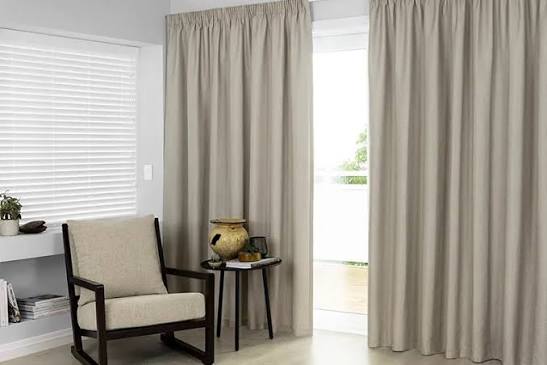 | Thermal Insulated Curtains At Blinds N Curtains, our Thermal Insulated Curtains are expertly designed to transform your home into an energy-efficient sanctuary without... View product → |
Frequently asked questions
What makes curtains bespoke rather than simply custom-sized?
Bespoke curtains are designed around the room, window, fabric, lining, heading, hardware and operating requirements, not just adjusted to a width and drop.
What happens during a proper curtain survey?
The survey records window measurements, recess depth, sills, radiators, doors, handles, obstructions, fixing surfaces, track or pole positions and how the curtains will operate.
How do fullness, headings and stack-back change the finished look?
Fullness controls the amount of fabric in the folds, the heading shapes the top edge, and stack-back determines how much window and wall the open curtains cover.
How should you specify privacy, darkness, warmth and sound control?
Treat each goal separately by choosing suitable fabric and lining combinations, checking light gaps, considering thermal layers and setting realistic expectations for sound reduction.
What should you confirm before ordering and installing bespoke curtains?
Confirm final measurements, fabric and lining, heading type, fullness, track or pole, control method, clearances, tolerances, installation scope and care instructions.
Related products
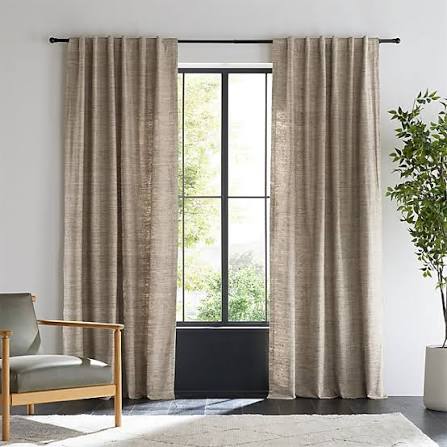 | Silk Curtains Transform your space with the timeless elegance and rich texture of custom silk curtains from Blinds N Curtains. View product → |
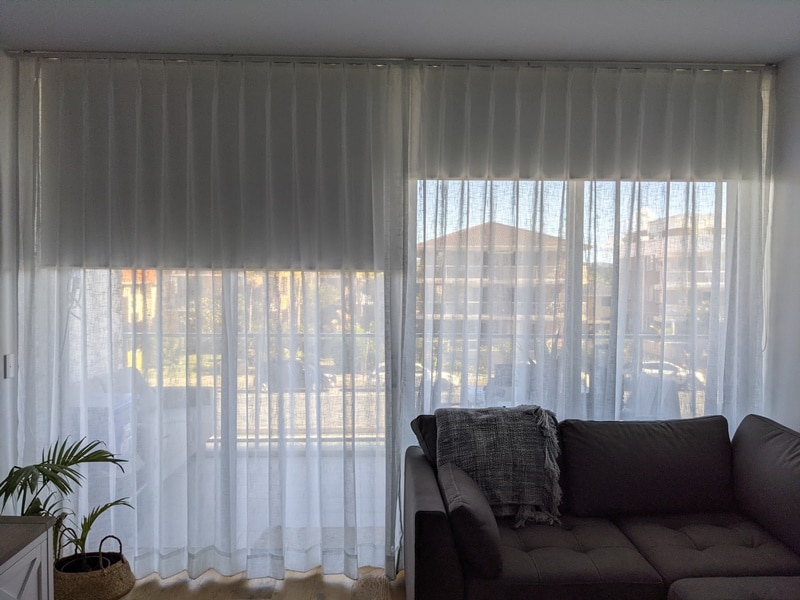 | Sheers ₹2000 Product Overview D'Decor Seamless Sheers represent the pinnacle of modern window treatments. View product → |
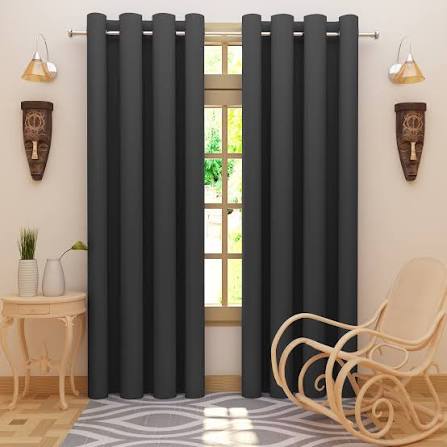 | Blackout Curtains at Blinds N Curtains offer the ultimate fusion of absolute privacy, light control, and sleek window styling. View product → |
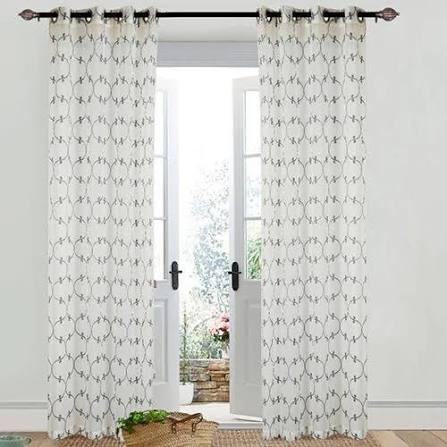 | Cotton Curtain Elevate your interior space with the natural warmth and timeless elegance of our premium Cotton Curtains at Blinds N Curtains. View product → |