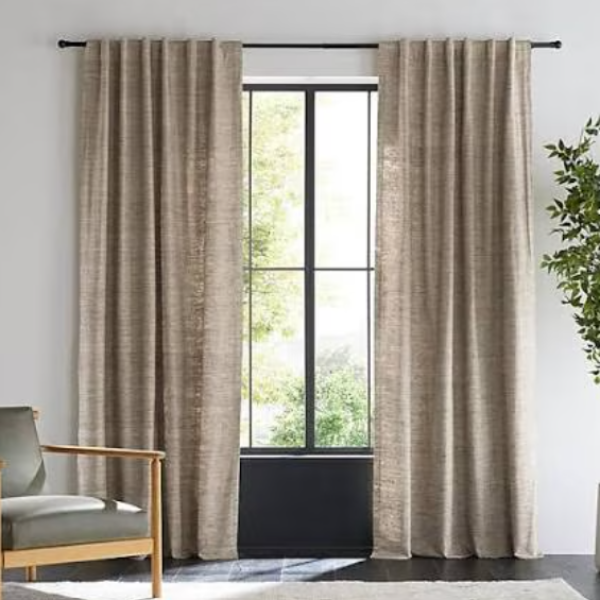
Silk curtains can become a defining element of an interior because their texture and natural-looking sheen interact with light differently from many ordinary curtain fabrics. They are often considered for formal living areas, bedrooms, dining spaces, and premium interiors where the window treatment is expected to contribute strongly to the décor.
For customers considering silk curtains in New Delhi, choosing the right material involves evaluating fabric composition, lining, sunlight exposure, stitching, and maintenance before placing an order.
Understand What Type of Silk Fabric You Are Buying
The term silk curtains can refer to different fabric compositions and finishes.
Some curtains use natural silk, while others use silk blends or materials designed to reproduce a similar visual effect. These options can differ in texture, durability, care requirements, and cost.
Customers should ask what the fabric contains rather than relying only on its appearance.
This is particularly important when selecting curtains for large windows, where the total fabric requirement can be substantial.
Lining Can Be Important
Lining is not merely an optional decorative addition.
Depending on the selected fabric, it can contribute to privacy, body, drape, and light control. It may also help support delicate decorative material.
The appropriate lining depends on the room.
A formal living area may need moderate privacy while allowing some natural brightness. A bedroom may require stronger light reduction. These requirements should be discussed before the curtains are fabricated.
Evaluate Sunlight Exposure
Strong direct sunlight should be considered carefully when choosing premium decorative fabrics.
Observe how much sunlight reaches the window and during which hours. A highly exposed window may need a different fabric and lining combination from one that receives indirect daylight.
This evaluation should happen before the final colour is selected.
Sunlight can also change how a fabric appears. A shade that looks deep under indoor lighting may look considerably lighter when illuminated from behind during the daytime.
Give Attention to Fullness
Silk curtains generally rely on folds to display their texture effectively.
Too little fullness can make the curtain look flat, while excessive fabric may feel unnecessarily heavy depending on the material.
The appropriate fullness is influenced by curtain heading, fabric weight, window dimensions, and the intended visual style.
For multiple windows in the same room, maintaining consistent fullness can help create a more balanced result.
Hardware Must Suit the Curtain
Decorative curtains can become heavy, particularly when lining and generous fullness are added.
Tracks, rods, brackets, and fittings should be selected accordingly.
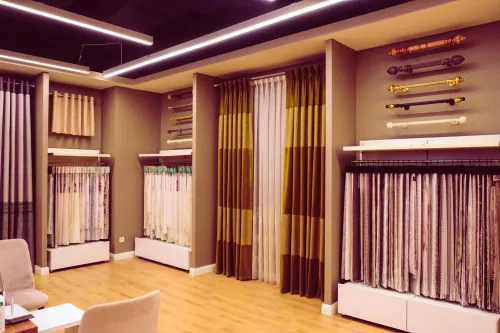
Hardware also affects appearance. Some interiors call for concealed tracks, while others use decorative rods as part of the design.
These choices should be made before final measurements because the hardware position influences curtain length.
Understand Cleaning Requirements
Premium curtains should be selected with long-term care in mind.
Some fabrics require specialised cleaning and should not be treated like ordinary washable curtains. Care instructions should therefore be understood before purchase.
This is especially relevant for frequently used rooms or windows exposed to dust.
Look for Customisation Experience
Silk curtains benefit from accurate measurements and careful workmanship because irregular hems, poor pattern alignment, or incorrect length can be noticeable.
Blinds N Curtains provides customised window furnishing options where fabric, lining, measurements, and finishing can be considered according to the intended space.
For New Delhi customers, silk curtains are best viewed as a complete window treatment rather than simply a premium fabric choice.
Material composition, exposure to daylight, lining, fullness, hardware, stitching, and maintenance all influence the final result. When these elements are planned together, silk curtains can provide a sophisticated finish while remaining appropriate for the way the room is actually used.
Keywords